Why holding tolerance over years — not quoting microns — is the real dividing line.
China CNC · Weekly Insight
China Five-Axis Enters Aerospace: What CNC Buyers Should Ask
Published 2026-10-20 · ← All CNC reports · ← GREE CNC
Executive summary — read this first.
- The event. KEDE CNC (科德数控, 688305) and COMAC's Shanghai Aircraft Manufacturing signed a revised agreement to build a joint Centre of Excellence (COE), announced 2026-03-16. At least seven categories of domestically controlled five-axis machines go into commercial-aircraft process development and pilot verification (中试验证).
- What it does not say. The company's own filing states the agreement carries no specific transaction amount and is not expected to materially affect current-year results. A COE is process and standards work — not a production order.
- Why you should still care. Aerospace is the strictest available proxy for process capability. The discipline it forces — thermal stability, closed-loop feedback, in-machine probing, traceability, long-run accuracy retention — is the same discipline that sets scrap rates and uptime in ordinary precision work.
- The honest boundary. Chinese high-end machines still hold a small share of the domestic high-end market; batch consistency and accuracy retention remain the commonly cited weak points; and the aerospace pull is paced by aircraft certification and engine supply, not by orderbook headlines.
- The practical output. Seven aerospace-derived questions you can put to any supplier — including us — and a clear statement of which part families each machine-builder is actually strongest in.
What actually happened
KEDE CNC — a Shanghai-listed builder known for making its own CNC system and core functional parts — signed a Centre of Excellence agreement with Shanghai Aircraft Manufacturing, the COMAC subsidiary that builds the C919 narrow-body. The date of the original agreement is not disclosed in the company's filing. On 2026-03-16 a revised agreement was announced that detailed the research focus.
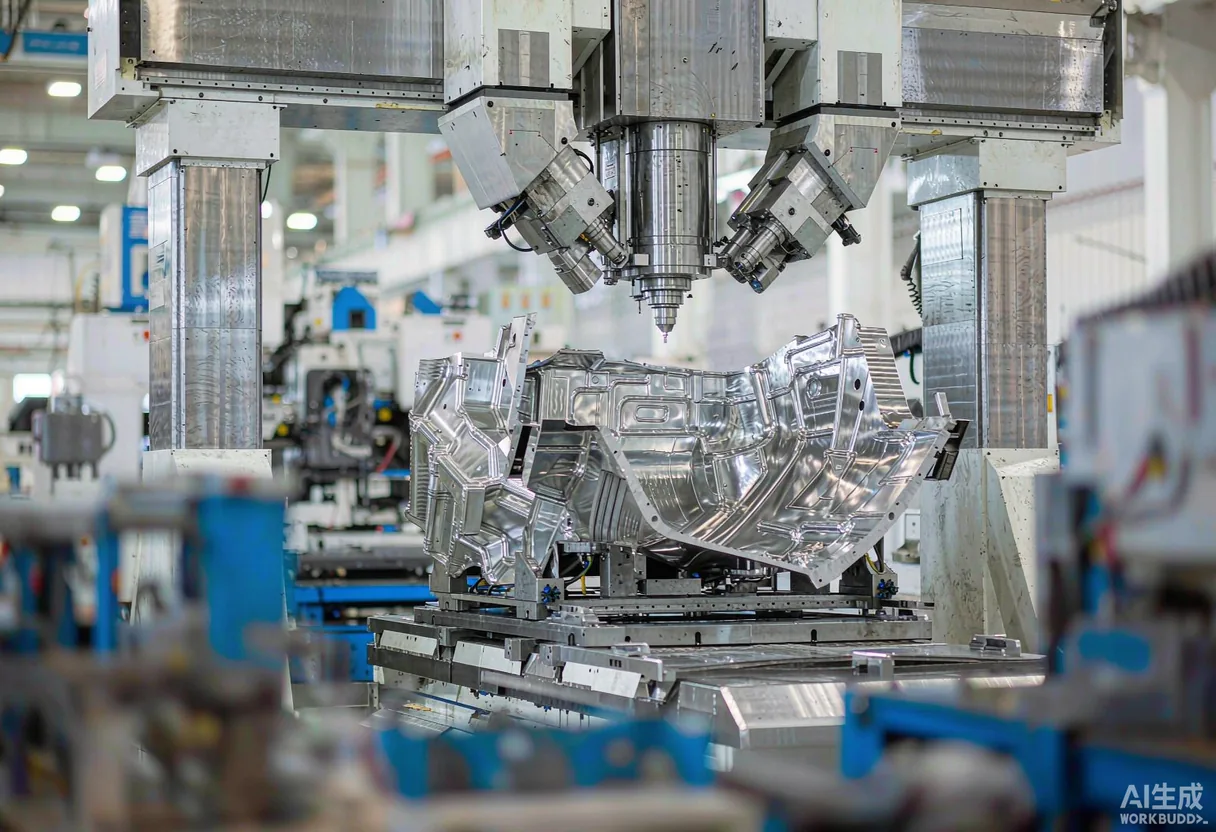
The scope, in the company's own words: joint work on machining processes for typical commercial-aircraft parts, pilot-scale verification (中试验证) of domestically built equipment, intelligent production-line integration, and multi-domain "NC workshop" co-ordination. KEDE supplies at least seven categories of machine — five-axis vertical turn-mill centres with flexible cells, five-axis horizontal machining centres, gantry machining centres, and five-axis horizontal trunnion (翻板) mills among them — plus its domestic CNC system for deep integration and optimisation against civil-aircraft scenarios.
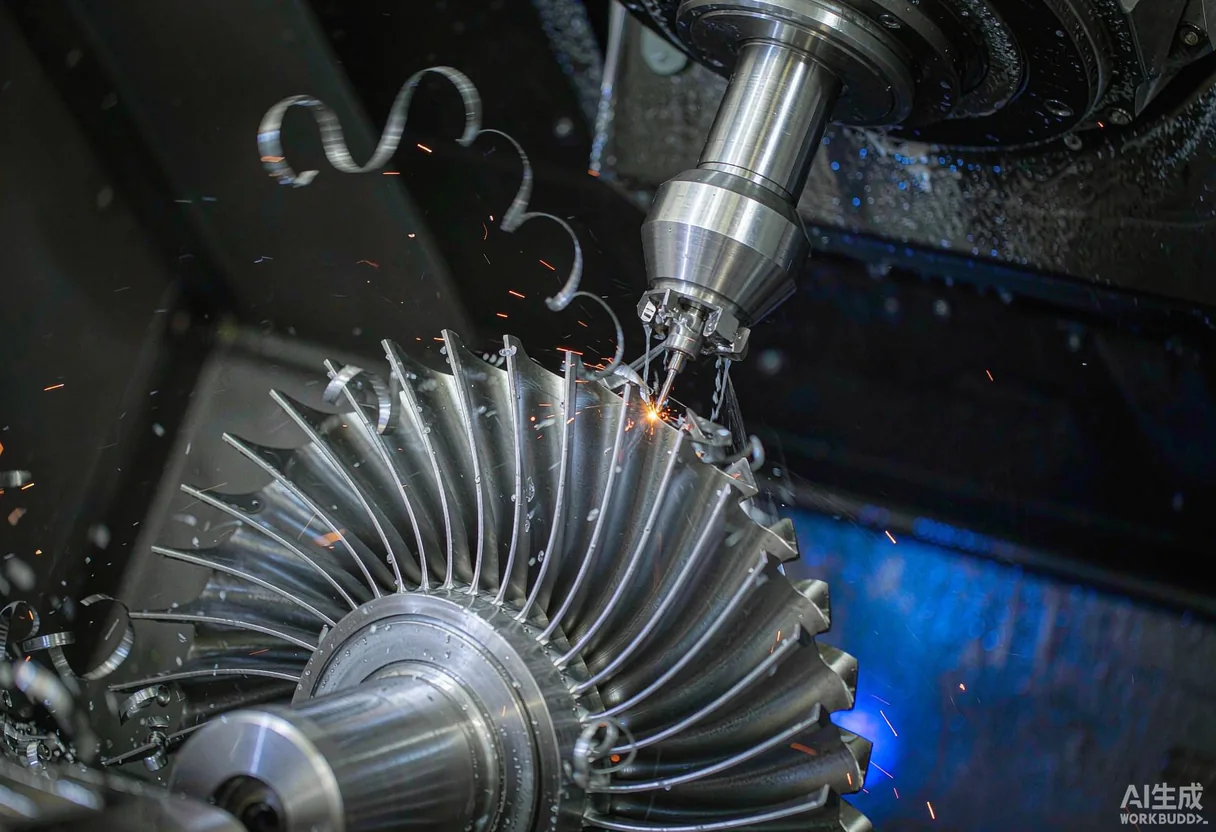
By August 2026, KEDE told reporters the programme had moved into implementation, and that its machines are already in wide use across more than 30 user units under AVIC and the Aero Engine Corporation of China. The company also points to a six-axis five-linkage blisk (bladed-disk) machining centre it describes as a world first, and a high-speed blade-tip grinding centre it describes as filling a domestic gap.
Sources: SSE disclosure 688305_20260316 (2026-03-16); Shanghai Securities News / China Securities Net (2026-03-15); Securities Daily investor Q&A (2026-08-04).
Snapshot: the numbers that matter
7+
five-axis machine categories committed to the COE
30+
aviation user units reported under AVIC / AECC
35.6%
KEDE H1 2026 R&D as share of revenue
<10%
domestic high-end machine-tool share (MIIT-cited)
| Data point | Value | Source type |
|---|---|---|
| COE agreement announced | 2026-03-16 (revised agreement); original agreement date not disclosed in the filing | Exchange filing (High) |
| Scope | Process development + pilot verification + line integration + standards | Exchange filing (High) |
| Financial materiality | "No specific transaction amount; not expected to materially affect current-year results" | Company's own risk statement (High) |
| KEDE H1 2026 revenue | ¥214m, −27.4% YoY | Exchange filing (High) |
| KEDE H1 2026 R&D | ¥76.2m (−22.4%), 35.6% of revenue (+2.3pp) | Exchange filing (High) |
| KEDE H1 2026 new orders | Up close to 25% YoY (management) | Investor communication (Medium-High) |
| Key-part / machine localisation | ~85% functional parts; >90% whole machine | Investor communication (Medium-High) |
| Domestic high-end share | Under 10%; industry margin 3.7% | Provincial media citing MIIT (Medium-High) |
Strengths: what is genuinely moving
- A real benchmark is now in the loop. Civil aviation is the hardest customer a machine tool can have. Parts are expensive before they are cut, tolerances are tight, material is unforgiving, and a scrap part costs more than the machining time. Having domestic machines inside that loop — even at pilot scale — generates the kind of process data that no showroom can produce.
- Self-controlled motion chain. KEDE reports roughly 85% of key functional parts (spindle, torque motors, drives, rotary/tilt tables, its own CNC system) developed in-house and over 90% whole-machine localisation. For a buyer this is a supply-risk argument as much as a technology one: fewer single-source imported items means fewer licence and lead-time surprises.
- Breadth, not a single hero model. Seven-plus machine categories for one programme means a builder that can cover turn-mill, horizontal, gantry and trunnion architectures. That breadth usually indicates mature engineering platforms rather than a one-off.
- Policy scaffolding is producing verifiable artefacts. MIIT's Innovative Machine-Tool Product Handbook (2026) lists 147 typical cases nationwide. Qinchuan Machine Tool placed five products on the related list and now offers five-axis centres across four series and 20-plus models; a Tianjin builder's precision vertical grinder — hydrostatic bearing plus full-closed-loop direct drive — was selected after addressing accuracy drift under sustained load.
- The direct-drive route is maturing. A Zhejiang provincial innovation centre released an AI-enabled all-direct-drive machine in September 2026, replacing the "servo motor + ball screw" chain. National Machine Tool Quality Supervision & Inspection Center testing put whole-machine performance 30–60% above the national standard, with engineers citing 4 µm accuracy and 72-plus hours of continuous operation. Direct drive removes a wear and backlash path — which is precisely a retention argument.
Limitations: what this does not prove
Read the company's own words first. The COE filing states there is no specific transaction amount and no expected material effect on current-year results. This is process development and pilot verification — the step before qualification, not the step after it.
- Pilot verification is not production qualification. A part that machines successfully in a joint laboratory still has to survive rate production: fixture repeatability, tool-life consistency, operator variation, and month-over-month accuracy. Ask which stage a claim refers to.
- Capability building and shipment volume can move in opposite directions. KEDE's H1 2026 revenue fell 27.4% while R&D rose to 35.6% of revenue and new orders grew close to 25%. That is a long-cycle investment profile — encouraging for technology depth, and a reminder to confirm a specific production slot rather than assume one.
- The structural gap is still there. Reporting citing MIIT puts domestic machines at under 10% of the high-end domestic market, with high-end five-axis and CNC-system localisation around a third, and an industry average margin of 3.7%. The same reporting describes a widespread "builder–user disconnect": many builders sell machines without deep downstream process knowledge. Capability is real, but it is not evenly distributed.
- Demand follows certification, not headlines. The C919's publicised orderbook runs to well over a thousand aircraft while cumulative deliveries to date are in the low tens; EASA's validation is still in progress, with its executive director indicating approval is not expected before 2028. For a buyer, this means the aerospace pull on Chinese machine tools is real, qualification-gated and gradual — not a sudden volume wave that will consume all available capacity.
- Process databases take years. Industry consensus remains that batch consistency and long-run accuracy retention are the common weak points, and that titanium and nickel superalloys under long heavy cuts are where accumulated process data matters most. That is a time-and-data problem, not something a single machine sale can shortcut.
Competitive positioning: lanes, not a ladder
Chinese builders are not all chasing the same work. Treating them as interchangeable is the most common buyer mistake. The table below lists stated specialisation, not a quality ranking.
| Builder | Stated strength | Best-fit part family |
|---|---|---|
| KEDE CNC (688305) | Own CNC system + core parts; aviation & aero-engine programmes | Blisks, casings, structural aero parts, complex 5-axis prismatic |
| Qinchuan Machine Tool (000837) | Five-axis across 4 series / 20+ models; RV reducers | Gear and reducer families, general 5-axis |
| Haitian Precision (601882) | Scale manufacturing; gantry & VMC breadth; ~19% overseas revenue | Mould and die, general production machining |
| Beijing Jingdiao | Micron-level finishing; in-machine measurement and compensation | Small high-precision parts, 3C and instrumentation |
| Gree Intelligent Equipment | Large aluminium / NEV integrated die-cast parts; short lead times | Battery trays, structural die castings, large aluminium plates |
Overseas reality: what changes when you are not in China
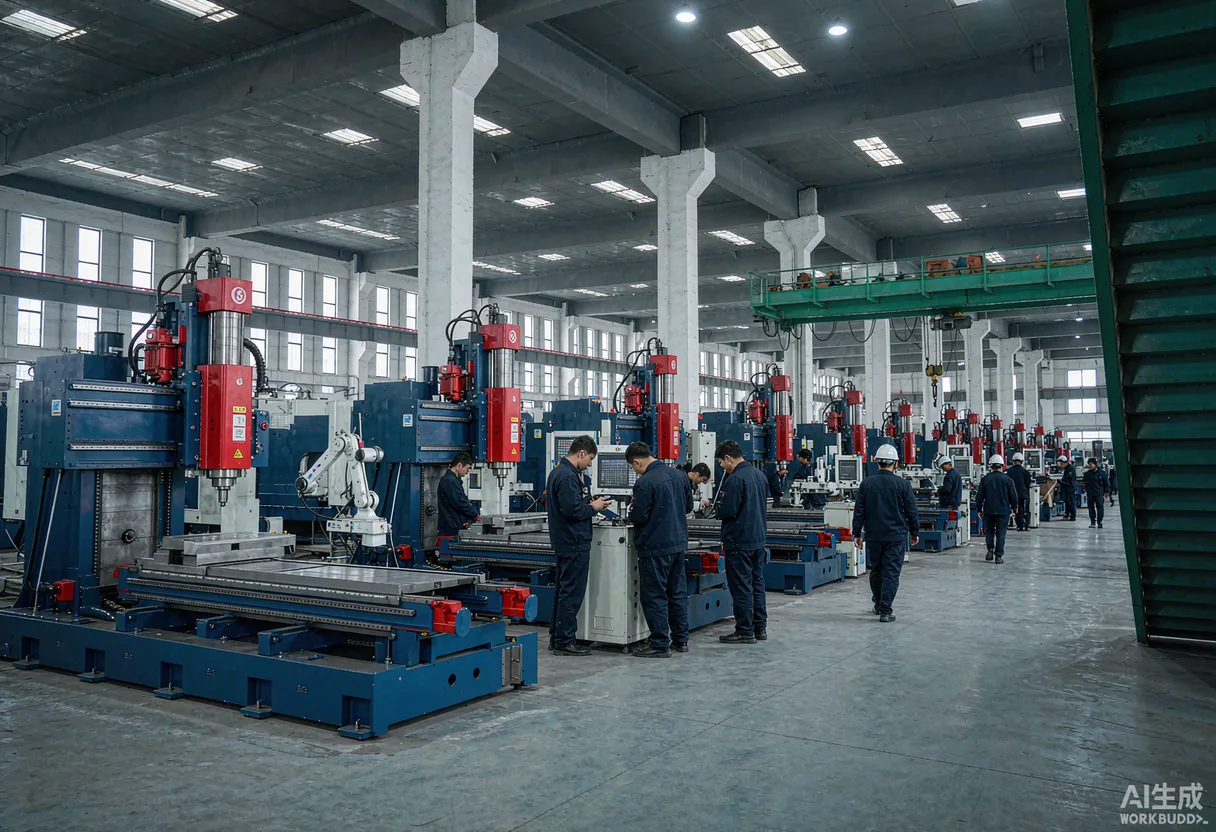
Everything above describes machines. What reaches your shop is a system: machine, controller, process package, certification file and a service commitment.
- Certification attaches to parts and processes, not to machines. Buying a five-axis centre does not make you aerospace-capable. AS9100 or equivalent quality systems, material traceability, first-article inspection and controlled process documentation are what qualify a supplier — the machine is one input among several.
- Controller origin and update ownership must be written down. Who owns the CNC "brain", who ships model updates, and who may change it without your approval? This is where divergence between brands is largest, and it is the clause most often left vague.
- Export administration now runs in both directions. Japan's revised export control order took effect 2026-08-16 covering high-end five-axis machines, rotary tables and grating scales; China has tightened dual-use controls in parallel. Long-lead options — rotary table, probing, through-tool coolant, automation interface — should be on the original purchase order, because retrofits re-enter the queue.
- Service radius is a contract term, not a brochure line. A young global service network means response depends on your distributor. Get response times, spares stocking and escalation in writing, and name the legal entity that carries the warranty.
Where Gree CNC fits — and where it does not
Per Gree Electric's investor research record dated 2026-09-20, its intelligent-equipment business concentrates on three product lines: CNC machine tools, industrial robots and automation, and intelligent logistics and warehousing, with continued work on self-developed core components, machine accuracy, running stability and intelligence. In H1 2026 it completed and began batch delivery of a new generation of fixed-beam gantry machining centres (GA-GF6028 / GA-GF8030) aimed at new-energy vehicles and large steel-structure castings; published repeat positioning for that class is 0.010 mm — a large-gantry figure that should not be compared with five-axis flagship numbers.
Honest positioning. Gree's demonstrated strength today is large aluminium work — integrated die-cast structural parts, battery trays and similar — supported by the GA-FMB3020D high-speed dual five-axis gantry. Aero-engine titanium blisks and nickel superalloys under sustained heavy cutting are not where Gree's process database is deepest. If your parts are aluminium structural or NEV-related, Gree is in its lane and worth a run-off. If they are titanium or nickel rotating parts, say so at the first enquiry and ask for material-specific evidence — including from suppliers who claim broader coverage. We would rather lose the enquiry than win it on a claim that fails in your shop.
Sources: Gree Electric investor research record (2026-09-20); Gree Electric H1 2026 business review; gie.gree.com. Gree's high-end controller is described as partner-led, not fully in-house.
Data credibility rating
| Claim | Rating | Basis |
|---|---|---|
| COE signed, 7+ machine categories, scope of work | High | Shanghai Stock Exchange disclosure, 2026-03-16; corroborated by two securities newspapers |
| No transaction amount; no material current-year impact | High | Company's own risk statement in the same filing |
| 30+ aviation user units; blisk and blade-tip machines | Medium-High | Company statements to Securities Daily, 2026-08-04; not independently audited |
| KEDE H1 2026 revenue / R&D / localisation rates | High | Exchange filings and investor communications |
| Domestic high-end share <10%; margin 3.7% | Medium-High | Provincial party-media analysis citing MIIT; single-origin framing |
| Direct-drive machine 4 µm / 72 h / +30–60% vs standard | Medium | Engineer statements reported by state and provincial media, plus national inspection centre testing; single programme, not a general spec |
| C919 orderbook vs deliveries; EASA timing | Medium | Aggregated from COMAC programme materials and aviation press; treat as directional |
| Gree product-line and gantry figures | High | Company disclosure / investor records |
Guidance by use case
- Aerospace structural aluminium (ribs, frames, spars). The closest category to proven Chinese capability. Evaluate on gantry or trunnion rigidity, thermal behaviour over an 8-hour cut, and a run-off on your largest part. Expect to specify your own quality documentation.
- Aero rotating parts in titanium or nickel alloys. Proceed case by case. Demand material-specific cutting data, tool-life figures, and a paid trial on your alloy. Do not accept a category-level assurance.
- General precision job shop. This is where the aerospace spillover pays off most — better thermal design, closed-loop scales and probing now appear well below flagship price points. Buy on retention evidence and service terms, not headline microns.
- Mould and die. Prioritise surface-finish consistency and long-cycle stability over peak accuracy. Ask for a finished sample from a comparable steel.
- NEV and large aluminium structure. Capacity, chip evacuation and rapid traverse dominate. This is a well-served segment with short lead times; verify delivery dates in writing because the market has tightened.
FAQ
Does a Centre of Excellence with COMAC mean Chinese five-axis machines are qualified for aerospace production?
No. The agreement covers joint process development, pilot-scale verification (中试验证), intelligent line integration and standards work. The listed company stated in its own announcement that the agreement involves no specific transaction amount and is not expected to materially affect current-year results. Process validation is a necessary early step, not a production qualification.
Why should a non-aerospace buyer care about aerospace machine-tool programmes?
Aerospace is the strictest available proxy for process capability. It forces discipline in thermal stability, closed-loop feedback, in-machine probing, material traceability and long-run accuracy retention. Those are the same properties that determine scrap rates and uptime in ordinary precision work, so the engineering pressure shows up later in general-purpose machines.
Is it realistic to buy a Chinese five-axis machine for titanium or nickel-alloy aerospace rotating parts?
Treat it as a case-by-case question, not a category answer. Long heavy cuts in titanium and nickel superalloys depend on process databases accumulated over years of production, and industry reviews still describe batch consistency and accuracy retention as the common weak points. Ask for run-off data on your material and duty cycle, and for the process package in writing.
What is the single most useful question to ask any supplier after reading this?
Ask for a run-off on your own part, in your own material, with cycle time and Cpk acceptance written into the contract — plus the identity of the CNC system and who owns its updates. Everything else is a conversation; that is evidence.
Seven aerospace-derived questions for any supplier
- Which stage is your claim from — laboratory, pilot verification, or rate production?
- Can you show a run-off on my material at my duty cycle, with Cpk?
- What is in the process package — post-processor, CAM templates, tooling list, fixture concept, proven parameters?
- Who owns the CNC system, and who ships updates? Is substitution permitted without my approval?
- What is the thermal-drift curve over 8, 24 and 72 hours, and what is full-closed-loop on which axes?
- What are the written response times, spares stocking and warranty entity in my country?
- Which certification file, CE/UKCA declaration and material-traceability documentation ships with the machine?
#ChinaCNC #FiveAxis #Aerospace #COMAC #BuyerChecklist
Want these seven questions answered on your part?
Send your part drawing, material, tolerance and annual volume. Our application engineers will tell you plainly whether a Gree machine is the right lane — and if it is not, what to look at instead.