Start here if you have not yet defined the machine class you need: eight questions, instant result, no signup.
Public Reference · Buyer Tools
CNC Machine Spec Benchmarks: How to Read a Specification Sheet
What this page is — and what it deliberately is not.
This is a reference for anyone comparing machining centres. It does three things: it publishes the specifications of the machines we sell along with the basis for each figure, it gives typical parameter ranges by machine class so you can sanity-check any spec sheet, and it sets out how to verify a number before you commit money.
It is not a league table declaring one brand better than another. Machines are built for different jobs, and a number that matters enormously for one buyer is irrelevant to the next. We show data and framing; the conclusion is yours.
It also contains no prices. Price depends on configuration, region, volume and timing, and a number printed here would be out of date before you read it. For anything commercial, talk to us — or to whoever you are buying from.
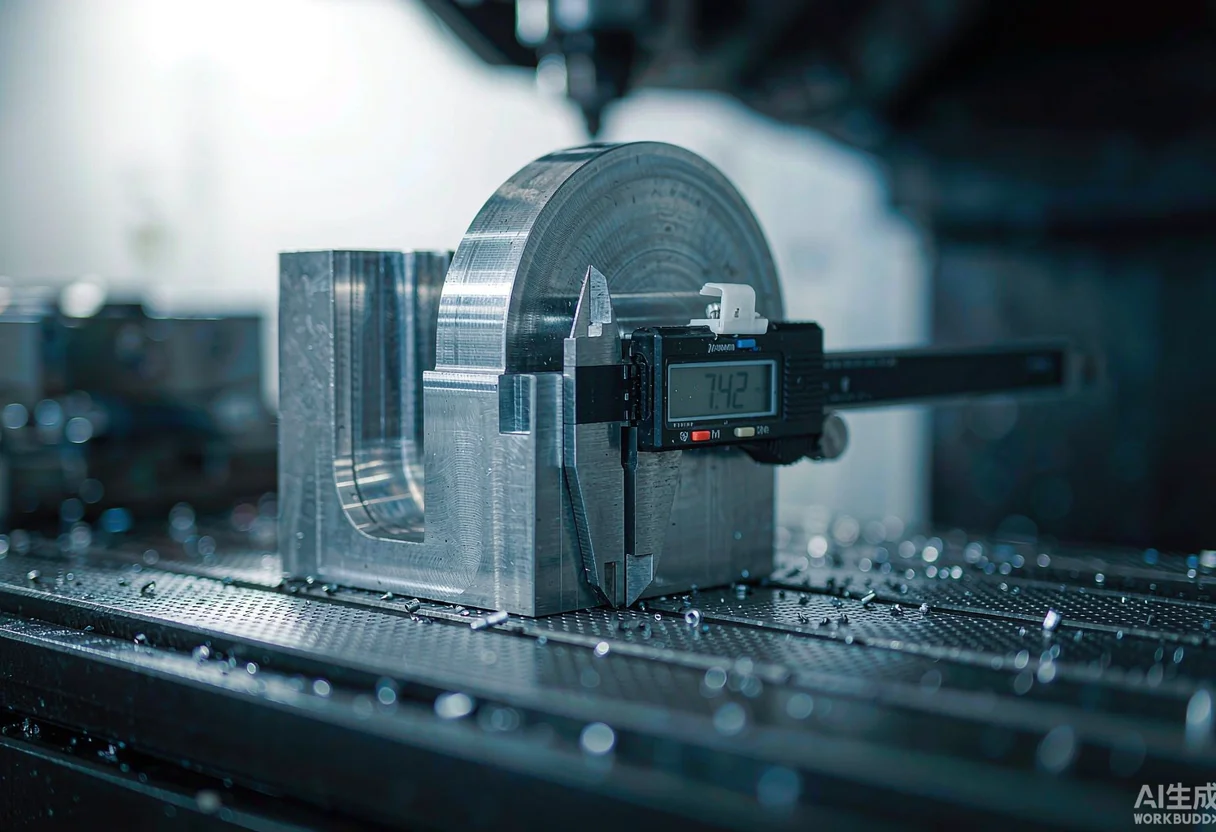
1. Published specifications — with the basis for each figure
Most vendor spec sheets present every number with the same confidence. In reality the numbers rest on very different foundations: some are verified against a signed technical agreement, some are typical production values, and some are design targets that depend on the final configuration. We think you should be able to tell which is which, so we label every row.
| Model | Class | Key published figures | Basis |
|---|---|---|---|
| GA-FA320 | 5-axis vertical, direct-drive rotary table | Travel 800 × 550 × 600 mm · BT40 · 12,000 rpm · 11 kW · positioning 0.01 mm · repeatability 0.006 mm · Φ320 cradle table, 100 kg | Verified per signed technical agreement |
| GA-UHD500 | High-speed 5-axis | Positioning 0.004 mm · repeatability 0.002 mm · 1.5 s tool change | Vendor-published typical target |
| GA-FMB3020D | Dual-beam gantry, twin spindle | Travel 2,700 × 1,900 × 1,250 mm · HSK A63 · 20,000 rpm · 20/24 kW · 35/42 N·m · 2 × 40 tools · tool change ≤ 2.5 s · positioning 0.035 / 0.025 / 0.025 mm | Subject to final technical agreement |
| GA-VT540 | 5-axis, 3C-focused | Repeatability ~0.006 mm · mirror-surface capability | Vendor-published typical target |
| GA-MV856 | 3-axis vertical machining centre | Table 1,000 × 550 mm, 500 kg · travel 800 × 550 × 600 mm · BT40 · 12,000 rpm · 7.5/15 kW · torque 35.8/95.5 N·m · rapid 48 m/min | Vendor-published typical target |
| GA-DV750 | High-speed drill-tap centre | Table 650 × 500 mm, 200 kg · travel 700 × 500 × 300 mm · HSK E40 · 30,000 rpm · 8.5/12.75 kW · torque 8.1/12.15 N·m · rapid 36 m/min | Vendor-published typical target |
| GA-TMY6555 | Turn-mill centre | Travel 230 × 550 × 550 mm · max swing 650 mm · turning length 525 mm · 15/18.5 kW · 66 mm bar bore · 8 in chuck · 12 tools | Vendor-published typical target |
Read the "Basis" column before anything else. A verified figure is one we will stand behind contractually. A vendor-published typical target is what the machine is designed to achieve and what we expect in a normal configuration — but your tooling, fixturing, material and environment all move the result. Neither is a promise about your part; only a trial cut is.
2. Typical ranges by machine class
These are orientation figures, not specifications of any particular machine. They exist so that when a spec sheet shows you a number, you can tell whether it is ordinary, generous or surprising for that class. If a machine claims a figure far outside its class range, that is not automatically bad — but it is a reason to ask how it was measured.
| Parameter | 3-axis VMC | 5-axis machining centre | Gantry / large format | Turn-mill |
|---|---|---|---|---|
| X travel | 600–1,200 mm | 500–1,200 mm | 2,000–6,000 mm | 200–400 mm |
| Spindle speed | 8,000–15,000 rpm | 12,000–20,000 rpm | 15,000–24,000 rpm | 4,000–6,000 rpm |
| Spindle power (cont.) | 7–22 kW | 11–30 kW | 20–45 kW | 11–30 kW |
| Rapid traverse | 24–48 m/min | 30–60 m/min | 40–120 m/min | 20–30 m/min |
| Positioning accuracy | 0.008–0.02 mm | 0.005–0.015 mm | 0.02–0.05 mm over long travel | 0.008–0.02 mm |
| Repeatability | 0.004–0.01 mm | 0.002–0.008 mm | 0.01–0.025 mm | 0.004–0.01 mm |
| Tool capacity | 16–30 | 24–60 | 32–120 | 12–24 |
| Chip-to-chip tool change | 2–6 s | 1.5–5 s | 2–6 s | 1–3 s |
Note that accuracy figures worsen as travel grows — a 3-metre gantry will not hold the same number as a 600 mm vertical, and any spec sheet implying otherwise deserves a second question. This is physics, not quality.
3. Positioning: who builds what
Where a maker sits in the market matters more than any single number, because it tells you what the machine was optimised for. This is our reading of the field; other buyers may weigh the factors differently.
| Maker | Origin | Positioning | Control self-sufficiency | Lead time | Best for |
|---|---|---|---|---|---|
| Gree | China | Appliance-derived 5-axis challenger | High on motion chain (spindle, linear motor, direct-drive tables); controller partnered | ~1 month | Turnkey 5-axis cells, EV and robotics |
| Haas | USA | Volume workhorse | Low–mid | Fast (US) | Reliable general machining |
| DMG MORI | Germany/Japan | Premium global | Uses external systems | 3–6 months | Certified ultra-precision |
| Haitian Precision | China | Large machining centres, value | Mid | 2–3 months | Big parts on a budget |
| KEDE | China | Pure-play five-axis | High — own GNC control system | 2–3 months | Five-axis purism, aerospace |
An honest note on controllers. Gree's strength is the motion-execution chain — spindle, linear motors, direct-drive rotary tables and the surrounding servo logic — much of it transferred from decades of compressor and motor engineering. On the CNC controller itself, the arrangement is a partnered one rather than fully in-house. Some measurement and transmission base parts, including ultra-high-precision bearings and gratings, remain partly imported. We would rather tell you that here than have you discover it in year three.
When a Gree machine is the wrong fit — said plainly. We would rather lose a sale than win the wrong one. Gree is a poor choice if: you require a fully in-house CNC controller with no partnered component (a maker such as KEDE builds its own GNC, and that is the straighter path for you); your parts exceed the largest gantry travel in our range and you need a single machine rather than a cell; or your compliance regime requires a Western-premium certification chain traceable to a specific standard we do not carry. In each case the honest move is to look at the other makers in the table above, not at us. This benchmark exists so you can tell the difference before money moves.
4. Five questions that turn a number into a fact
Any supplier — including us — should answer these in writing. If one of them is met with "don't worry about that", it becomes the most important question on your list.
- Which standard was the accuracy measured to? ISO 230-2, VDI/DGQ 3441 and JIS B 6201 are not interchangeable, and a supplier who knows the difference is a supplier who actually measures.
- Was the machine cold or warm, empty or cutting? Machines grow as they heat up. A figure taken cold and unloaded describes a state your machine will be in for about fifteen minutes a day.
- Where on the table was it measured? One measurement at table centre tells you almost nothing about the far corner of a metre-long travel.
- What is the torque at the speed I actually cut at? Peak power is a marketing number. Continuous torque between roughly 200 and 1,500 rpm is what removes steel.
- Is thermal compensation fitted, and what ambient temperature does it assume? At ±0.005 mm and tighter, thermal growth is your dominant source of error — bigger than the machine's fundamental accuracy.
5. Credibility of what is on this page
| Claim | Source | Rating |
|---|---|---|
| GA-FA320 figures (travel, speeds, accuracy, table) | Signed technical agreement | High |
| GA-FMB3020D / MV856 / DV750 / TMY6555 figures | Vendor specification, subject to final agreement | Medium configuration-dependent |
| GA-UHD500 and GA-VT540 accuracy figures | Vendor-published | Medium not independently verified here |
| Typical ranges by machine class | General industry practice | Orientation not machine-specific |
| Competitor positioning and lead times | Public filings, disclosures, industry practice | High consistent across sources |
| Claims of fully in-house CNC control for Gree | Gree marketing | Low contradicted by the partnered-control arrangement and imported bearings/gratings |
Frequently asked questions
What is the difference between positioning accuracy and repeatability?
Positioning accuracy describes how close the machine gets to the coordinate it was told to reach. Repeatability describes how consistently it returns to the same point again and again. For production work, repeatability predicts your scrap rate far better than positioning accuracy does, because a machine that is consistently off by a known amount can be compensated, while a machine that lands somewhere different every time cannot.
Why do two machines with the same stated accuracy perform differently?
Because the number depends on how it was measured. Accuracy measured unloaded on a cold machine at one point on the table is a different claim from accuracy measured under cutting load after the spindle has been running for four hours at the far corner of the table. Always ask which standard was used, whether the machine was warm, and where on the table the measurement was taken.
Is a higher spindle speed always better?
No. High spindle speed helps with aluminium and small tools, but cutting steel, stainless or titanium happens at low speed where torque is what removes metal. A 30,000 rpm spindle with low torque at 800 rpm will struggle on steel that a 12,000 rpm high-torque spindle handles comfortably. Match the torque curve to your material, not the headline rpm.
How should I verify a specification before I commit?
Pay for a trial part. Send your drawing, agree a price for the machined component, and run it over a full working shift on the machine you intend to buy. Measure the results yourself with your own equipment. A twenty-minute demonstration shows what a machine can do once; eight hours shows what it will do consistently.
Related reading
Want the figures for your part, not the catalogue?
Send your drawing, material, tolerance and target volume. We will confirm which figures apply to your configuration — and where a number on this page would not hold for your part, we will say so before you ask.