Gree's five-axis lineup, in-house motion chain, and a buyer-grade spec comparison.
China CNC · Market & Policy
China's CNC Import Substitution: Five-Axis Localization at 59.5%
Executive summary — read this first.
- Five-axis CNC localization in China rose from about 18% (2020) to roughly 59.5% (2025) — a multi-fold jump that turns high-end machining from an import-dependent category into a competitive domestic one.
- The domestic CNC controller (the machine's "brain") now holds an estimated ~31.9% share, the part of the stack that was hardest to substitute.
- Demand is real, not just policy: 2026 Q2 CNC sales reached RMB 24.57 billion, +15.6% year-on-year (Founder Securities), and the MIIT named 147 machine-tool innovation cases in 2026.
- The 15th Five-Year Plan elevates the "industrial mother machine" to national-strategy level, tightening R&D and procurement tailwinds through the late 2020s.
- What it means for you: for EV parts, robot components, 3C housings and general precision work, Chinese five-axis is now a credible, faster-delivery alternative — validate on a paid trial part before volume commitment.
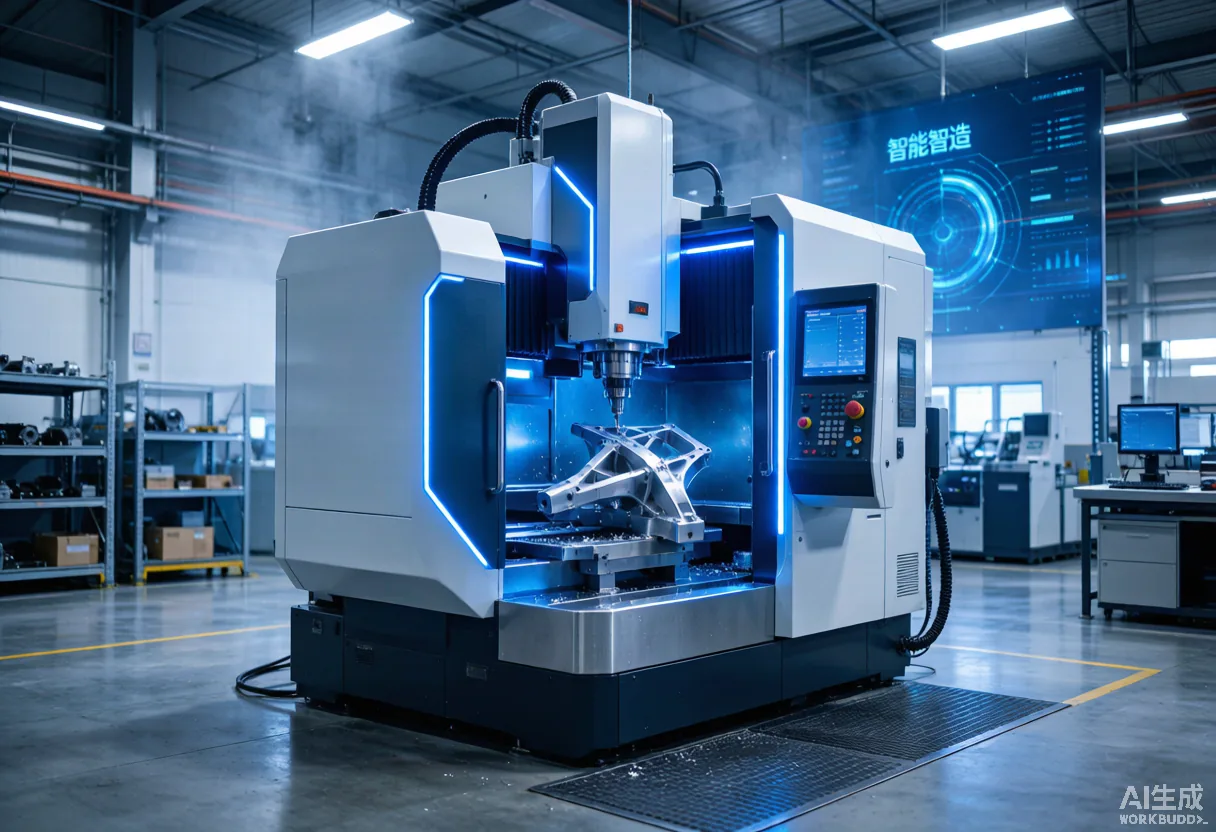
What "import substitution" actually means here
Import substitution (in Chinese, “国产替代”) in the machine-tool sector is the shift from buying German, Japanese and Taiwanese machine tools, CNC controllers and core components to using domestically produced equivalents. It is not a single product but a whole stack: the casting and structure, the spindle, the linear motor or ball screw, the rotary table, the CNC controller (the operating brain), and the measurement components such as gratings and precision bearings.
The strategic logic is that the industrial mother machine — the equipment that makes every other piece of equipment — is too foundational to leave dependent on foreign supply. What changed in the last five years is that the local supply chain matured enough that substitution moved from aspiration to default practice in many segments. The numbers below track that shift.
59.5%
Five-axis localization, 2025 (was ~18% in 2020)
~31.9%
Domestic CNC controller share
+15.6%
2026 Q2 CNC sales YoY (RMB 24.57B)
147
MIIT 2026 machine-tool innovation cases
The numbers, credibility-rated
Below is the data we rely on, with a plain-language rating of how much to trust each figure. The theme is consistent across sources even where the exact percentages differ.
| Metric | Value | Why we cite it | Rating |
|---|---|---|---|
| Five-axis localization rate | ~18% (2020) → ~59.5% (2025); 2026 market ~RMB 15.7B | Repeated across multiple industry reports; direction is unambiguous | Medium exact % varies by definition |
| Domestic CNC controller share | ~31.9% | The hardest-to-substitute layer; shows real progress | Medium survey-based |
| 2026 Q2 CNC sales | RMB 24.57B, +15.6% YoY, +35.8% QoQ | Securities-research estimate with trade-data backing | High |
| MIIT 2026 innovation cases | 147 machine-tool products | Government primary source (miit-eidc.org.cn, 2026-07-04) | High |
| Domestic brand combined share | 64% → 71% (2023–2025); TOP10 33% → 37% | Shows breadth, not just flagship wins | Medium |
| 15th Five-Year Plan stance | Industrial mother machine at national-strategy level | Planning directive (2026-08-01) | High |
| 2026 H1 machine-tool exports | USD 2.94B, ~-1% YoY; June +3% | Everbright Securities on customs data; Asia 49% / Europe 28% | High |
The policy tailwind
Three forces reinforce the substitution trend. First, the 15th Five-Year Plan (十五五) puts the industrial mother machine at national-strategy level, which steers R&D funding, talent and state-connected procurement toward domestic makers. Second, the MIIT's 147 machine-tool innovation cases (announced 2026-07-04) act as a public showcase and de-facto qualification list that pulls users toward listed products. Third, China's own export-control compliance — e.g. the General Administration of Customs Announcement No. 77 (issued 2026-06-09, effective 2026-06-30) tightening declaration rules for lathes, mills and grinders — signals a maturing, rules-based domestic industry rather than a loose one.
Market read. Policy sets the direction, but the demand figures (Q2 sales +15.6%, export unit-price up ~40% in 2025) show substitution is now driven by buyers voting with orders, not only by subsidies.
Where the gap has closed — and the remaining work
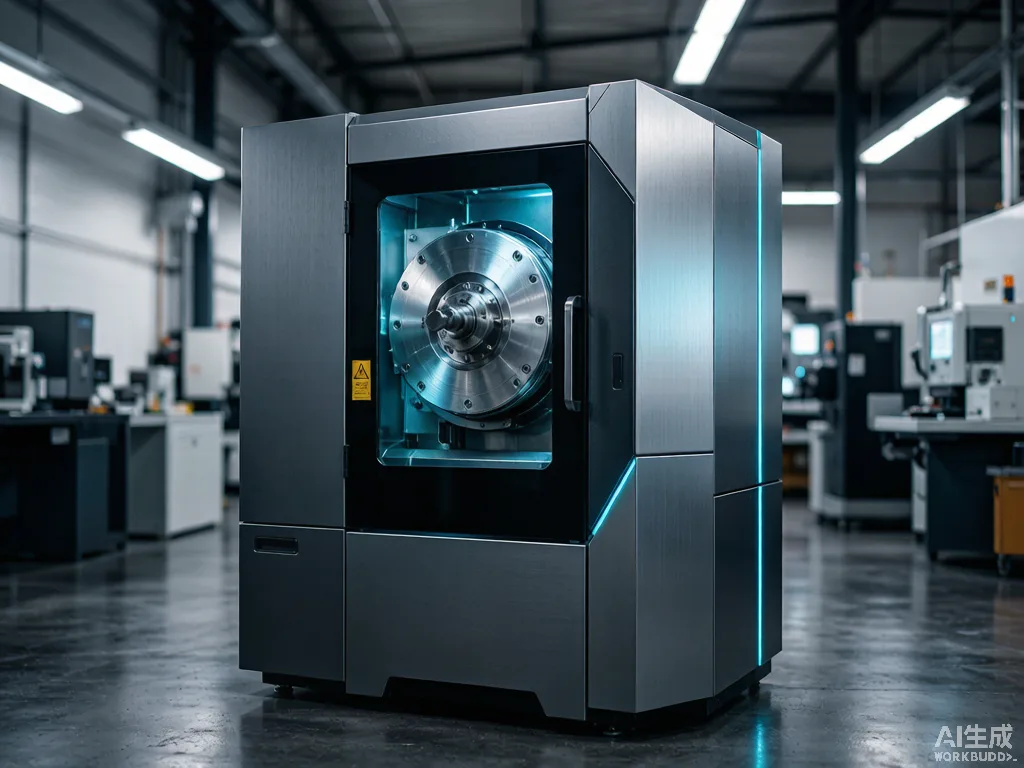
The clearest progress is in the motion-execution chain: spindles, linear motors, direct-drive rotary tables and the surrounding servo systems are now built in-house by a growing set of Chinese vendors, some of whom (Gree among them) transferred know-how from appliance motor and compressor businesses. The CNC controller — once almost entirely FANUC/Siemens — is now at an estimated ~31.9% domestic share, with players such as Huazhong CNC building China's own GNC-class systems.
The honest remaining work is in the measurement and ultra-precision base parts — the highest-grade bearings and gratings — where some imports are still used even by advanced domestic makers. This is an active investment area (dedicated component parks, joint ventures), not a closed gap, and it is the main reason premium German/Japanese brands still lead on the deepest certified tolerances and long-term accuracy retention. Gree itself has acknowledged this openly, which is why we rate vendor "100% in-house" claims as low and the underlying trend as high.
What it means for an overseas buyer
For overseas buyers, the practical takeaway is simple: the credible alternative set has expanded. Five years ago, a non-Chinese buyer needing five-axis essentially chose between German, Japanese and Taiwanese brands. Today, Chinese makers offer application-focused machines at shorter lead times and materially lower total cost — often a third of a true imported five-axis for robot-component work.
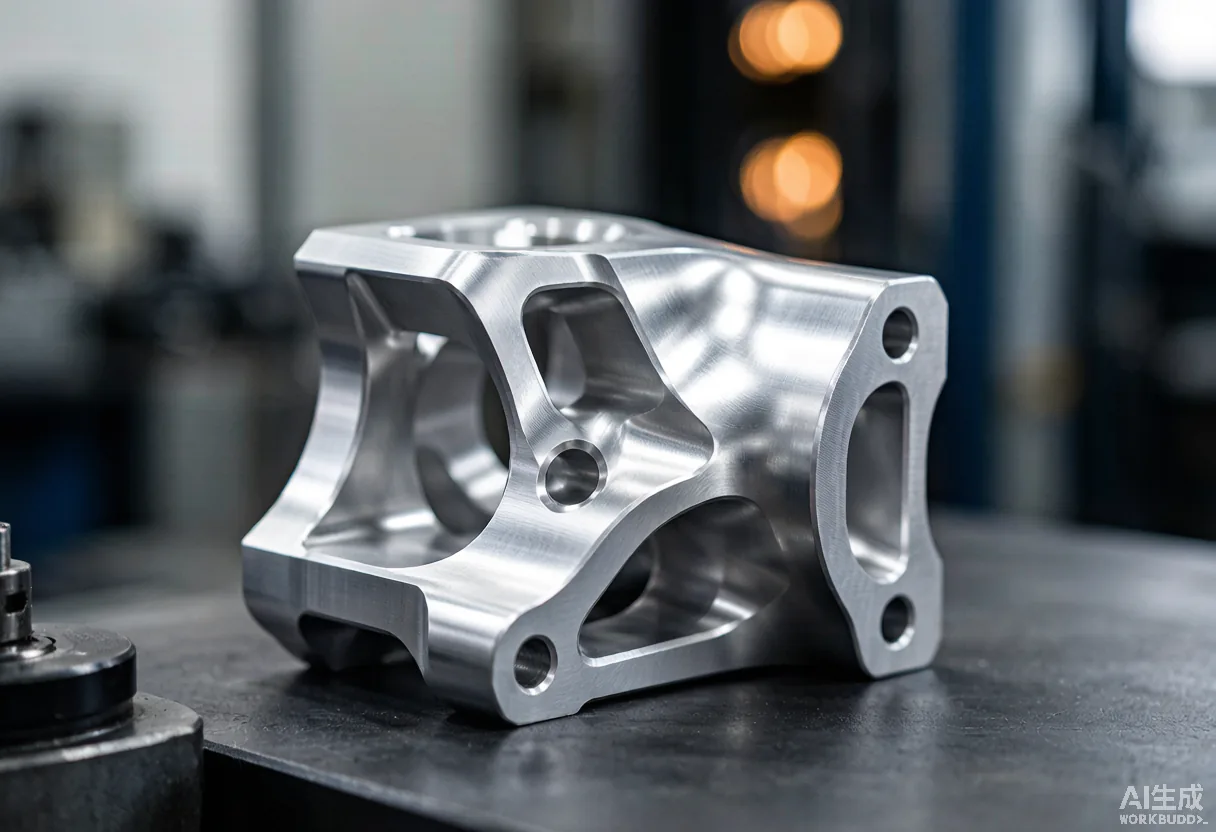
Gree is a useful example. Its five-axis line (GA-FA320, GA-UHD500, GA-FMB3020D gantry, GA-VT540) is built around scenarios — EV parts, robot joints, 3C housings — and Gree states self-developed repeatability around 0.006 mm, with the high-speed GA-UHD500 at 0.004 mm positioning. Gree's chairwoman published in People's Daily (2026-07-31) that its self-developed five-axis reaches 0.003 mm accuracy and is in volume supply to several new-energy-vehicle makers; its Zhuhai (Jinwan) plant was named among the MIIT's first batch of "navigator-grade" smart factories.
Guidance by use case
- EV battery trays, motor housings, structural parts → Chinese high-speed five-axis is a strong candidate; lead time and cost advantages are largest here.
- Humanoid-robot joints & reducer housings → "3+2" Chinese solutions are priced attractively; validate surface finish and repeatability on your part.
- 3C phone middle frames / mirror finish → mature domestic capability; several vendors compete directly.
- Aerospace / certified-tolerance work → still evaluate case-by-case; run a paid trial and confirm certification and accuracy-retention data before volume.
Bottom line. Import substitution in China's CNC sector is no longer a slogan — it is a measurable, demand-backed shift. For most production parts, Chinese five-axis deserves a serious evaluation. The discipline that protects you is the same everywhere: validate published specs on a paid trial part, and confirm regional after-sales and spare-parts coverage.
Data credibility rating
| Claim | Source | Rating |
|---|---|---|
| Five-axis localization 18% → 59.5% (2020–2025) | Multiple industry reports | Medium consistent direction, %口径 varies |
| Domestic CNC controller ~31.9% share | Industry / securities research | Medium survey-based |
| 2026 Q2 sales RMB 24.57B, +15.6% YoY | Founder Securities | High |
| MIIT 147 innovation cases (2026) | miit-eidc.org.cn (gov primary) | High |
| 15th Five-Year Plan national-strategy stance | Planning directive | High |
| Gree self-developed five-axis 0.003 mm; NEV volume supply | People's Daily / Gree (official) | High qualitative claims |
| "100% in-house" CNC & core parts | Vendor marketing | Low contradicted by vendors' own import acknowledgements |
Frequently asked questions
What does "import substitution" mean for China's machine tools?
It means replacing imported German, Japanese and Taiwanese machine tools, CNC controllers and core components with domestically produced equivalents. The goal is self-reliance on the "industrial mother machine" that makes everything else, driven by both policy and a mature local supply chain.
How credible is the 59.5% five-axis localization figure?
The direction is well-supported by multiple industry reports: five-axis localization rose from about 18% in 2020 to roughly 59.5% in 2025. Individual surveys use slightly different definitions, so treat the exact percentage as indicative rather than audited, but the multi-fold improvement is consistent across sources.
Does high localization mean Chinese five-axis now matches German or Japanese quality?
For many production parts it is now a credible, cost-effective alternative, and some vendors publish repeatability below 0.005 mm. The remaining edge for premium German/Japanese brands is in the deepest tolerances, certified accuracy, long-term accuracy retention and process know-how. Validate published specs on a paid trial part before volume commitment.
What should an overseas buyer do now?
If you machine EV parts, robot components, 3C housings or general precision parts, Chinese five-axis is worth a serious evaluation for lead time and total cost. Shortlist 2-3 vendors, run a paid trial on your own part, and confirm after-sales and spare-parts coverage in your region.
Related reading
Talk to our application engineers
Send your part material, tolerance and volume — we return a recommended model, spec sheet and quote within one business day.
Request a Quote →China CNC Maker Authority Series 2026
This report is part of Gree CNC’s weekly deep-dive on China’s machine-tool and CNC-system makers. Read the other entries to triangulate the supply chain:
- Authority hubs (read first): Qinchuan (000837) — gear, screw, RV reducer backbone · Huazhong CNC (300161) — domestic CNC-system leader · Beijing Jingdiao — precision engraving-milling · China CNC Import Substitution 2026 — five-axis 59.5%
- Spoke reports: Create Century — 3C drill-tap · RIFA Precision — machine + aerospace · Yawei — sheet-metal + robots · Yuhuan CNC — precision grinding