China's CNC Brain — GSK (广州数控), the Domestic Controller Champion
Every machine tool has a brain — the CNC system — and in China that brain is increasingly domestic. GSK (广州数控 / Guangzhou Numerical Control) is the volume champion of that domestic brain, with a company-stated ~50% share of China's CNC-system market for over two decades. For an overseas buyer, GSK is the lens that makes "Chinese controller" concrete: mature at economy and mid-tier, climbing into five-axis, and a direct reference point for Gree's own GNC controller.
- Real strength: A deep, proven, low-cost controller + servo + robot stack. GSK 980 is the workhorse of Chinese economy lathes/mills; GSK 25i/27i bring five-axis RTCP for higher-end work; RB-series controllers run Chinese industrial robots. Cumulative CNC systems shipped: over 1.5 million sets (company-stated).
- Real caveat: GSK is private — there are no audited consolidated financials. Third-party revenue estimates swing from ~RMB 1.5B to ~RMB 9.6B depending on what segment is measured, so we quote no single number and rate financial claims Low confidence. The ~50% share is widely repeated in official media but is company-stated, not independently audited.
- One line: GSK proves the domestic controller ecosystem is real and cheap at scale — which is exactly the ecosystem Gree's GNC also lives in, and the tier a buyer must always name when evaluating a Chinese machine.
1 · Why the Controller Is the Real "Brain"
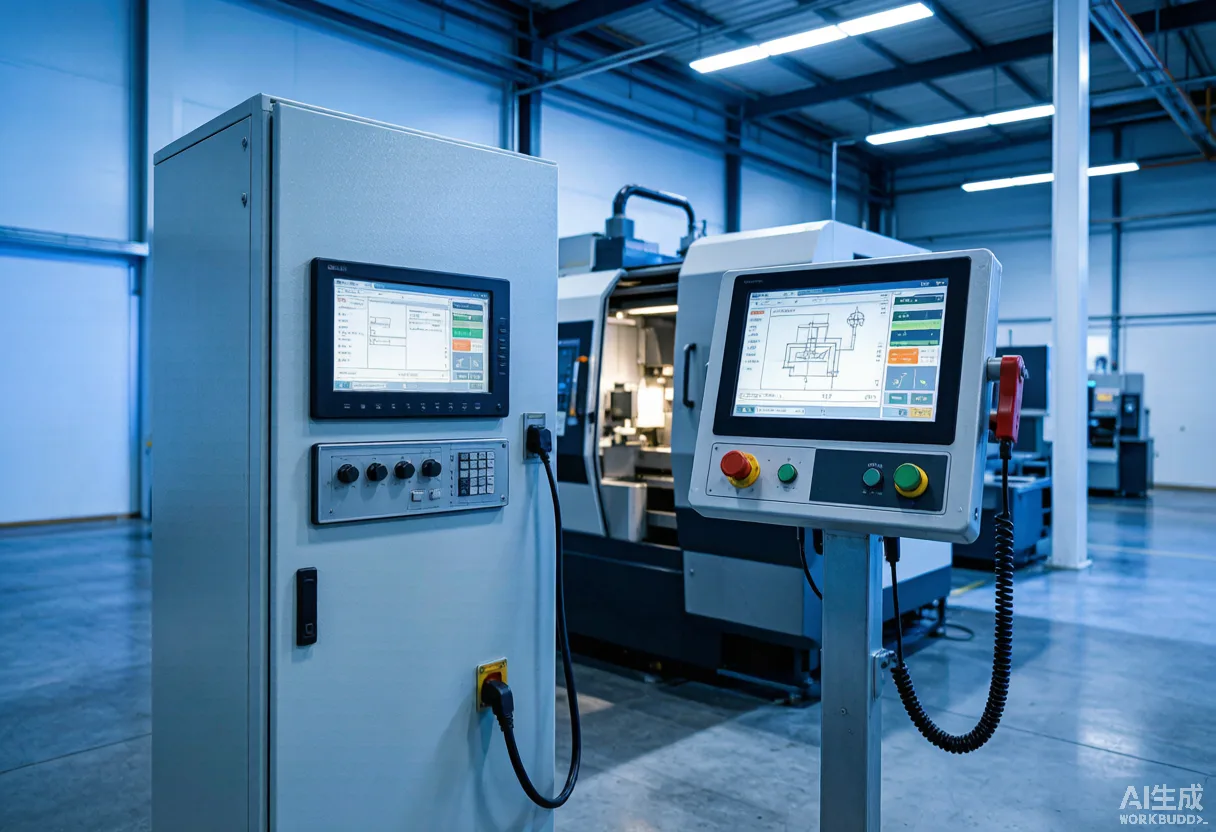
Two machines can look identical on the floor and behave completely differently because of what sits inside the cabinet. The CNC system decides interpolation accuracy, look-ahead, thermal/compensation behavior, five-axis RTCP math, and how the servo axes respond. It is the single component that most defines a machine's character and price.
For China's machine-tool rise, the controller was the last big dependency after the castings, ballscrews and spindles were largely localized. GSK is the company that closed that gap at volume: an economy GSK 980 made Chinese lathes affordable and serviceable nationwide, and the 25i/27i family pushed the same brand into five-axis territory. That is why GSK is the right anchor for a "domestic controller" brief — it spans the whole range.
This issue pairs naturally with our earlier Huazhong CNC brief (the technology-led listed player) and the import-substitution piece. GSK is the scale counterpart to Huazhong's tech.
2 · GSK Profile
| Attribute | Detail |
|---|---|
| Full name | 广州数控设备有限公司 (Guangzhou Numerical Control Equipment Co., Ltd.) |
| Founded / HQ | 1991 · Guangzhou, Huangpu District, Guangdong |
| Ownership | Private (not listed) — no audited consolidated financials |
| Core business | CNC systems, servo drives & servo motors, industrial-robot controllers & robots |
| Scale claims | Cumulative CNC systems >1.5M sets; ~100k systems produced & sold per year (company-stated) |
| Industry role | Described in official media as a "dual chain-leader" (双链主) for China's machine-tool and industrial-robot industry chains |
| Substitute record | 25i / 27i high-end systems reported to have replaced imports in NEV and rail-transit applications |
Source: official-media coverage (Workers' Daily / 中工网, 2025-06), vendor/product descriptions aggregated from multiple secondary sources. Revenue figures are deliberately omitted — see credibility note.
3 · Product Lines: 980 / 25i–27i / RB Robots
| Line | Positioning | Notes |
|---|---|---|
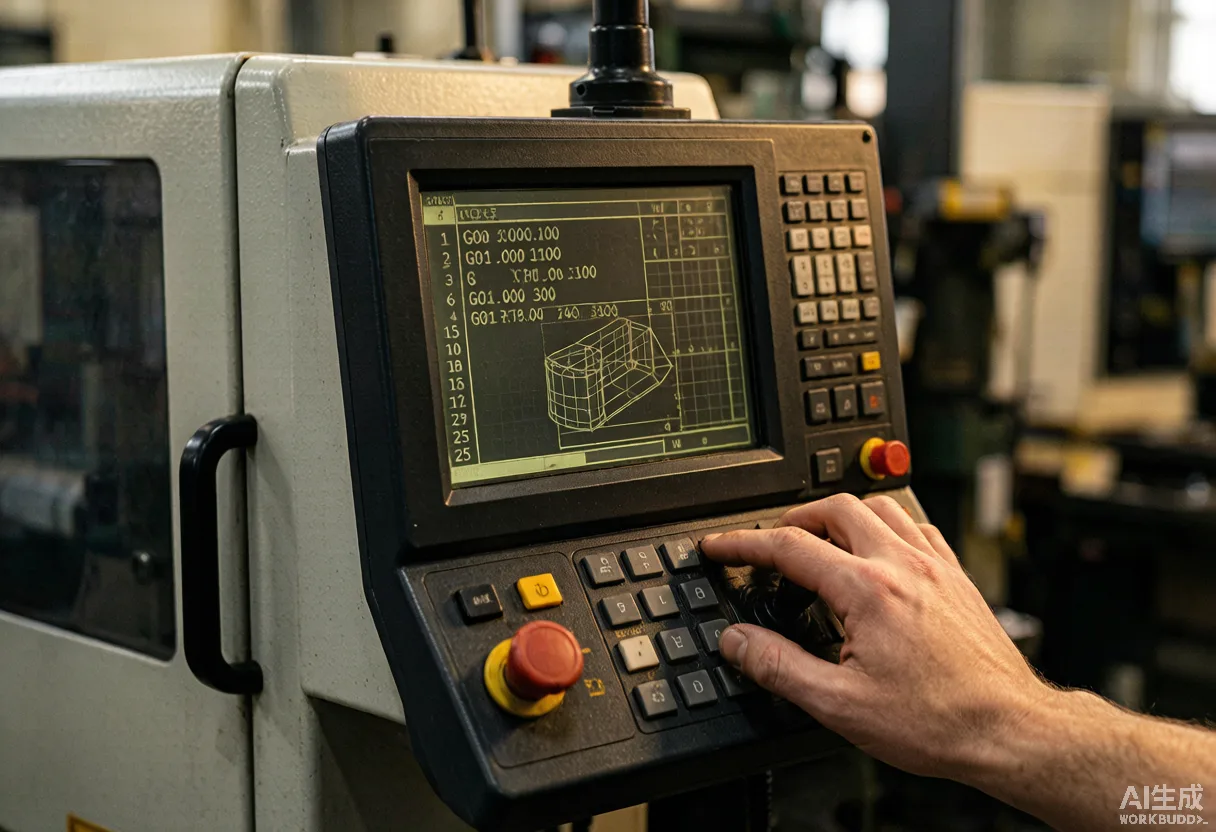
| GSK 980 series | Economy lathe / mill systems | The high-volume workhorse; ISO G-code compatible, friendly UI, huge service network. The default brain of countless Chinese economy machines. |
| GSK 25i / 27i / 218 | High-end, five-axis capable | RTCP (rotary tool-center-point compensation), reportedly ±0.005 mm class positioning; 32-bit multi-core, ~0.5 ms interpolation. Used where import substitution matters (NEV, rail). |
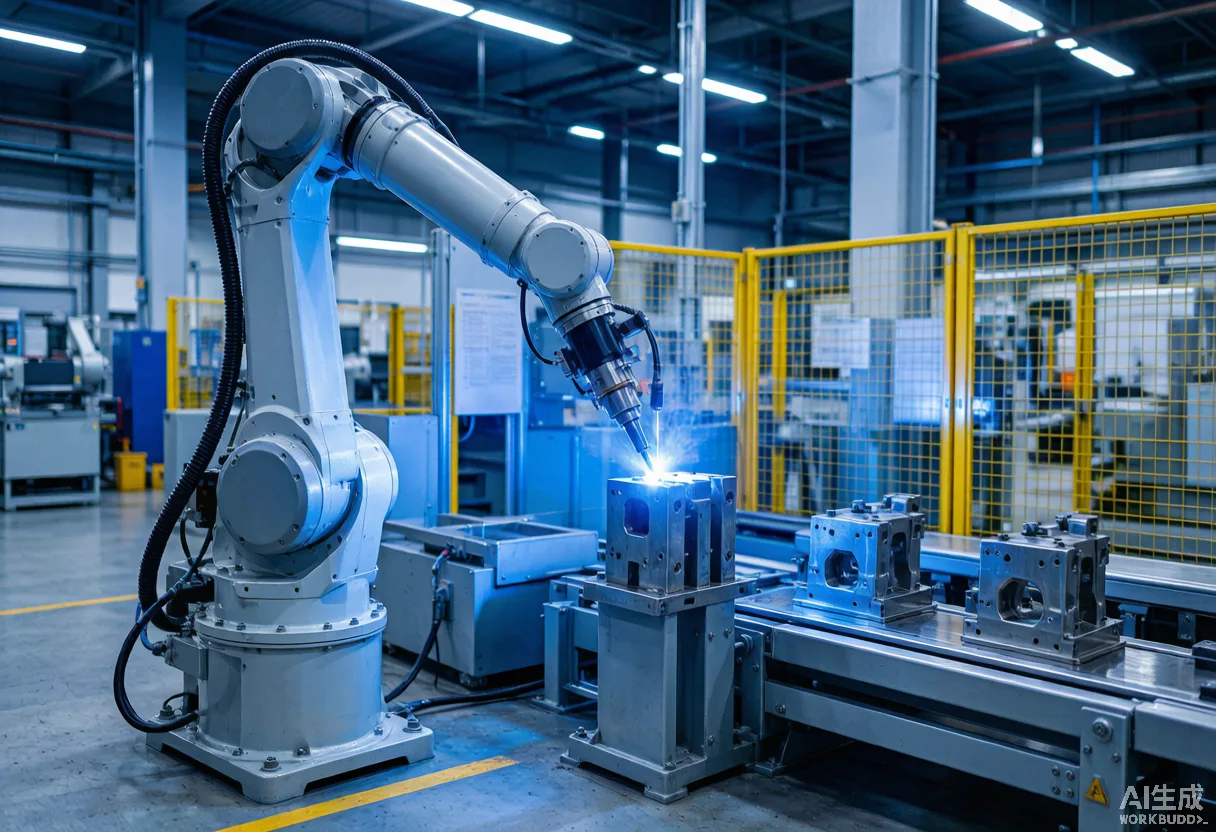
| RB-series robots | Industrial robots + controllers | Repeatability ≤0.02 mm class, 3–50 kg payloads; GSK is both a robot maker and a robot-controller supplier to others. |
| Servo & motors | In-house motion layer | Self-made servo drives and servo motors — the same vertical-integration logic Gree applies to its spindle and linear motor. |
Why the line-up matters
GSK is unusual in covering the full stack — controller, servo, motor, robot — under one brand. That vertical breadth is what lets a Chinese machine builder source a coherent motion package domestically. For an overseas buyer it means a Chinese machine's "domestic controller" is rarely a single lonely box; it is usually a matched controller+servo ecosystem, which is part of why Chinese machines are both cheap and fast to support.
5 · This Week's Gree CNC Angle
GSK and Gree's GNC sit in the same "domestic brain" category — but Gree plays a different game
Gree's machines use a controller built on in-house core parts plus a partnered system (not a Gree-branded GNC). GSK, Huazhong and KEDE are the other domestic controllers. So when an overseas buyer asks "is the controller Chinese?", the honest answer for many Chinese machines is "yes — often a GSK 980, a GSK 25i, or a Gree CNC." Three readings:
- GSK is proof, not a rival, for the ecosystem thesis. Its scale shows Chinese controllers are mature and cheap at volume. That lowers the risk premium a buyer attaches to "domestic brain" machines generally — including Gree's.
- Gree's differentiator is the package, not just the chip. Gree pairs GNC with an in-house spindle and linear motor, plus a machine + robot + thermal + process bundle for production-scale buyers. GSK sells the brain (and robots); Gree sells the whole production cell around its own brain.
- The buyer's real question is the tier. Economy GSK 980, high-end GSK 25i (five-axis RTCP), Gree CNC, or FANUC/Siemens — each implies a different capability and price class. Name the controller tier, and you name half the machine's character. We always recommend asking.
6 · Objective Limits & Risks
Transparency gap (private company)
No audited financials means less ability to verify durability, R&D intensity or service-network health from public data. For a buyer, that argues for direct factory audit and reference-site checks rather than relying on published scale claims.
Economy-tier perception
GSK's volume base is the 980 economy series. A machine "with a domestic controller" may mean a 980-class brain — perfectly fine for general work, but not the same as a 25i five-axis RTCP or a FANUC 31i. Verify the exact model, not just the brand.
High-end still catching up
The 25i/27i family is real and used in substitution cases, but at the very top — sustained ultra-precision, deep five-axis process know-how, global service — FANUC/Siemens/Siemens still set the benchmark. GSK is climbing, not yet level.
7 · Data Credibility Rating
| Claim | Source | Confidence |
|---|---|---|
| Founded 1991, Guangzhou; private; controller+servo+robot scope | Consistent across official-media & vendor descriptions | High |
| Product lines 980 / 25i–27i (RTCP) / RB robots | Multiple secondary & vendor sources agree | High |
| ~50% domestic CNC share / 1.5M+ cumulative systems | Company-stated, repeated in official media | Medium |
| 25i ±0.005mm, 0.5ms interpolation, 32-bit multi-core | Secondary technical specs (not vendor datasheet verified by us) | Medium |
| Revenue / profit (any single figure) | Private company; third-party estimates conflict (RMB 1.5B–9.6B by slice) | Low |
| "Dual chain-leader" industry role | Official-media description | Medium |
8 · Guidance by Use Case
Overseas buyer / distributor
Treat GSK as the reference for "what a domestic Chinese controller is." If a machine you are quoted uses a GSK 980, you are in economy/mid territory — great value, verify the job fits. If it uses a GSK 25i/27i or a Gree CNC, you are in five-axis-capable territory — verify RTCP, accuracy class and a local reference site. Always name the exact controller model in the spec sheet; "domestic controller" is not a specification.
Investor
GSK itself is not investable (private). The investable read is the trend: domestic controllers are taking share from imports at volume, which lifts the whole Chinese machine-tool stack (Gree, Topstar, KEDE, Haitian) and the component layer beneath it. Watch listed proxies — Huazhong (300161), Topstar (300607), Yiheda (301029) — as the verifiable way to track the same thesis.
Technology / supply-chain partner
GSK is a concrete procurement and benchmarking contact for controller+servo+robot packages sourced in China. For Gree's own supplier mapping, GSK shows how far vertical integration of the motion layer has already gone domestically — useful when weighing make-vs-buy on spindle, servo and controller internals.
Frequently Asked Questions
Is GSK the same as Gree's controller?
No. GSK (广州数控) is an independent CNC-system and robot supplier. Gree uses its own proprietary controller, branded GNC. Both sit in the 'domestic controller' category alongside Huazhong CNC and KEDE, but they are separate companies. GSK sells controllers and robots to many Chinese machine-tool builders; Gree builds complete machines around its own GNC plus in-house spindle and linear motor.
Is GSK a publicly listed company?
No. GSK is a private Chinese enterprise (founded 1991, Guangzhou). That matters for this series: unlike Topstar (300607) or Yiheda (301029), GSK publishes no audited consolidated financials. Third-party estimates of its revenue vary wildly (from ~RMB 1.5B to ~RMB 9.6B depending on which segment is measured), so we do not quote a single revenue figure and rate any financial claim Low confidence.
What does GSK actually make?
Primarily CNC systems (GSK 980 economy series, GSK 25i/27i/218 high-end five-axis with RTCP), servo drives and servo motors, plus RB-series industrial-robot controllers and robots. It is a controller-and-component champion, not primarily a machine-tool OEM — though it also builds some complete machines. GSK is described in official media as a 'dual chain-leader' for both China's machine-tool and industrial-robot industry chains.
Why should an overseas buyer care about a domestic controller brand?
Because the controller tier inside a Chinese machine decides a lot of its behavior and price. A machine may ship with an economy GSK 980, a high-end GSK 25i/27i (five-axis, RTCP), Gree's GNC, or a FANUC/Siemens. GSK's scale proves Chinese controllers are mature at volume and low cost — useful context when you evaluate any Chinese machine. The buyer's job is to ask which controller tier is inside, and at what capability class.