Gree's five-axis product line, in-house core components and where each model fits.
Gree CNC · Application Guide
Gree CNC for New Energy Vehicle Manufacturing
Executive summary — read this first.
- EV powertrains and bodies are full of large, thin-wall, high-precision aluminum parts (battery trays, motor housings, e-axle, structural members) — exactly the parts 5-axis machining handles best.
- Gree positions the GA-UHD500 (high-speed 5-axis, 0.004 mm positioning, 1.5 s tool change) and the GA-GF2755 (drive-force cut by ~78%, 1-second start/stop) squarely at this segment.
- The pitch is speed + repeatability + short lead time (about 1 month vs 3–6 months for European/Japanese imports) in a complete line (machine + robot + thermal control).
- Honest limitation: Gree is a relative newcomer in automotive-grade machining; validate on a paid trial part and check long-run accuracy retention before volume commitment.
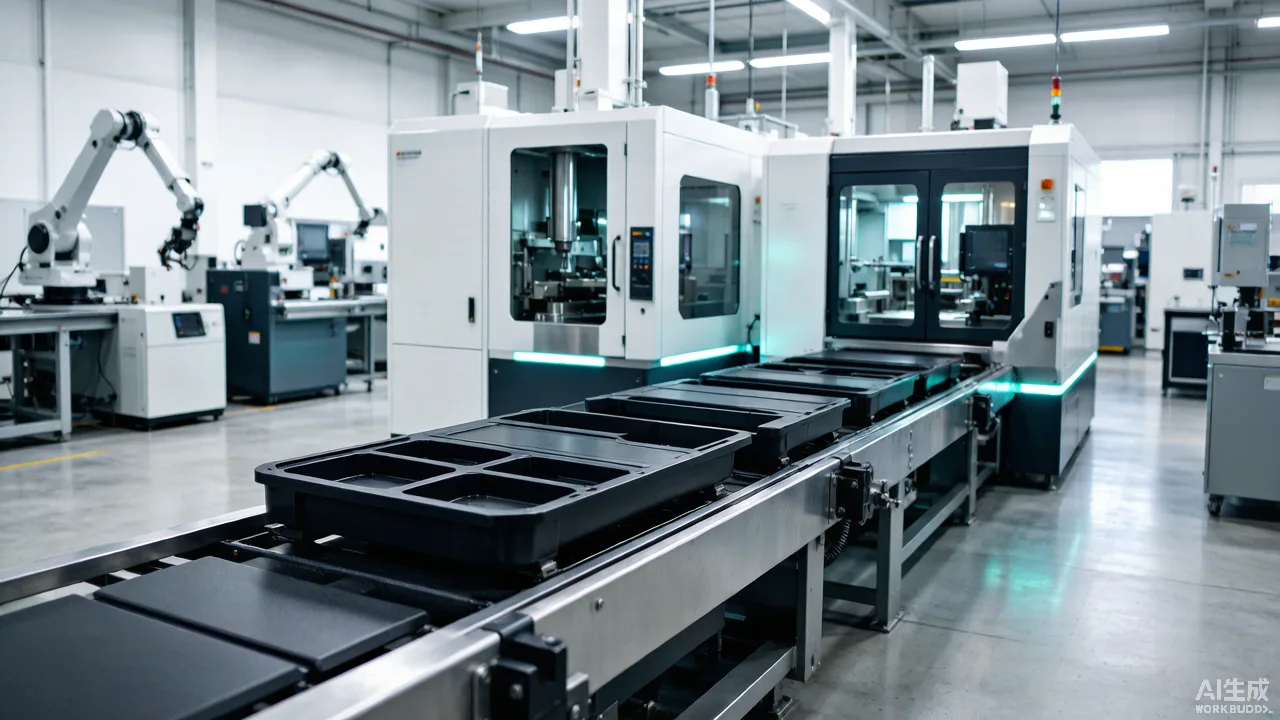
Why EV manufacturing leans on 5-axis CNC
New-energy vehicles replace the engine block with battery and e-drive systems built from large, lightweight aluminum castings. These parts have thin walls, tight tolerances and complex 3D geometry. A 5-axis machining center (five-axis = simultaneous 5-axis machining) finishes them in one clamping, avoiding the distortion and fixture cost of multiple setups on a 3-axis machine.
For EV makers racing to scale, two things matter most: cycle time (how fast a part is made) and consistency (every part identical across thousands of units). That is the gap Gree is targeting.
Gree models aimed at EV
0.004 mm
GA-UHD500 positioning accuracy
1.5 s
GA-UHD500 tool change
−78%
GA-GF2755 drive-force reduction (vendor)
~1 mo
Typical Gree lead time
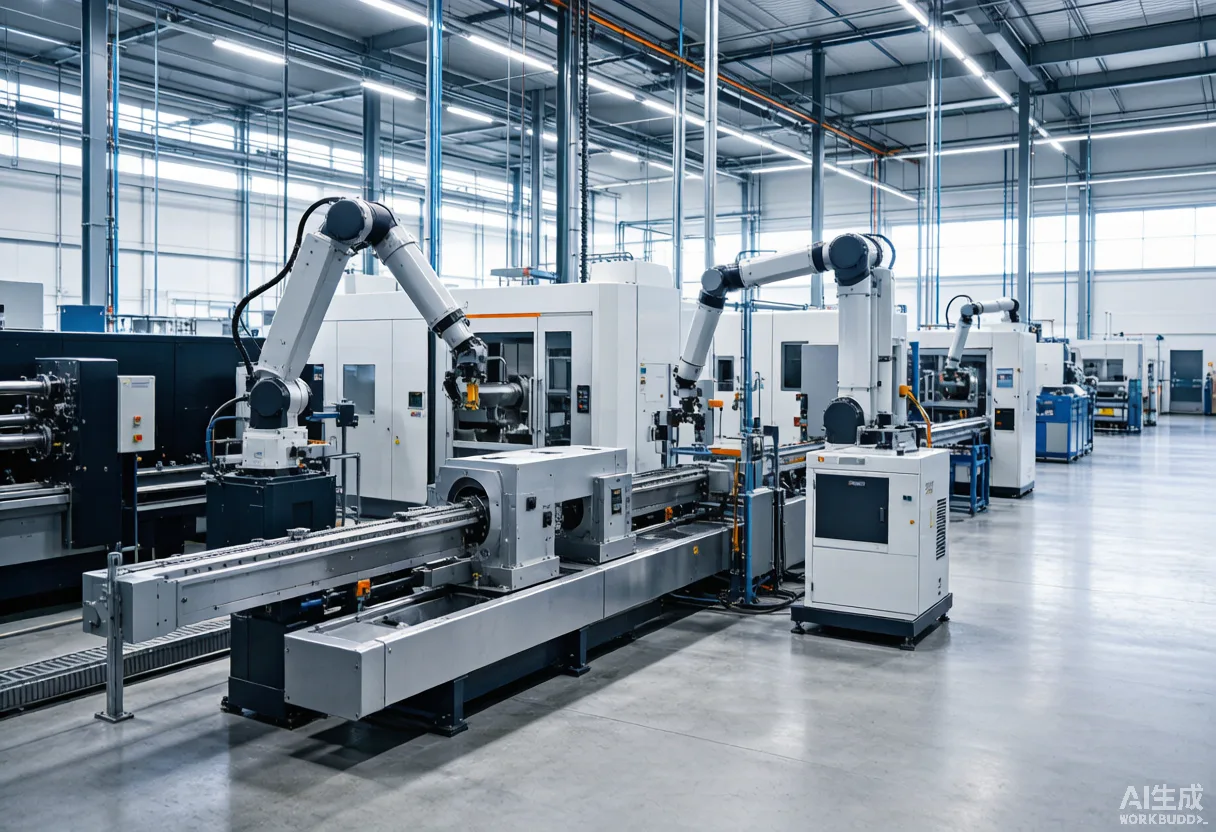
Gree's EV story is less about one hero machine and more about a turnkey cell: five-axis machining center + industrial robot (Gree makes those too) + temperature-controlled coolant (±0.1 °C oil chiller) so thermal drift doesn't wreck repeatability on long aluminum runs.
Typical EV parts Gree targets
| Part | Why 5-axis helps | Gree fit |
|---|---|---|
| Battery tray / pack housing | Large thin-wall aluminum, many angled features | High-speed 5-axis, single-setup |
| Motor housing / e-axle | Tight bore concentricity, repeatability | GA-UHD500 (0.002 mm repeatability class) |
| Structural / body members | Complex surfaces, crash geometry | Gantry GA-FMB3020D for larger parts |
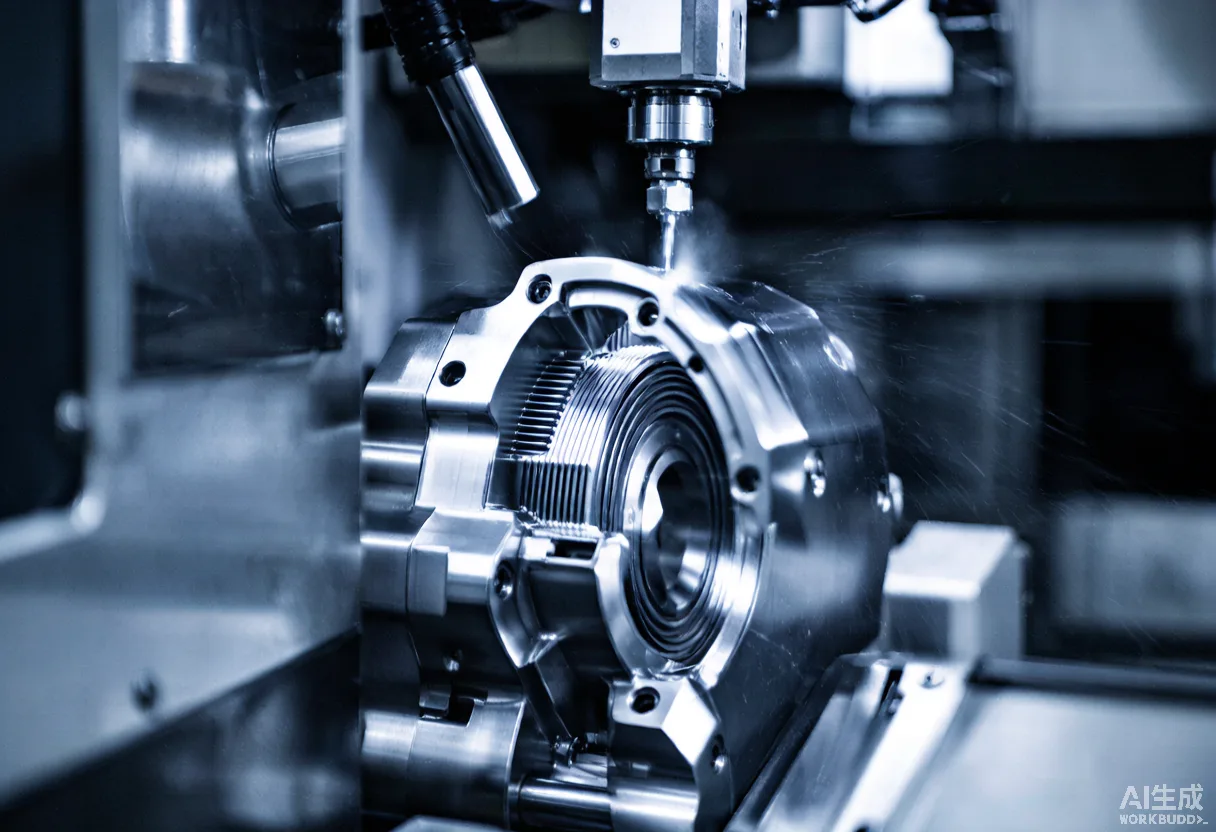
5-axis vs 3+2 for EV
3+2 fixes two rotary axes and uses only the three linear axes for cutting (cheaper, slower on true 3D contours). Full simultaneous 5-axis moves all five together — better for freeform EV surfaces and longer tool life via optimal tool angle. Gree offers both; for most EV structural work, simultaneous 5-axis on the GA-UHD500-class machines is the relevant option.
Data credibility rating
| Claim | Source | Rating |
|---|---|---|
| GA-UHD500 0.004 mm positioning / 0.002 mm repeatability | Gree published specs | Medium vendor-stated |
| GA-GF2755 −78% drive force, 1 s start/stop | Gree technical release | Medium vendor-stated |
| ~1 month lead time | Industry norm for Chinese makers; Gree self-described | High consistent with market practice |
| "Entered major EV / automotive OEM supply chains" | Chinese media / vendor claim | Low no independent confirmation |
Should you evaluate Gree for EV machining?
- Yes if you want a fast, cost-effective 5-axis cell with local support and can run a paid validation part.
- Be cautious if your spec demands the absolute tightest, certified automotive tolerances with decades of process history — incumbent German/Japanese brands still lead there.
- Pair this read with our 5-axis product guide and the Gree vs competitors comparison.
Bottom line. Gree is a plausible, cost-and-speed-advantaged option for EV machining cells, strongest as a turnkey solution rather than a single ultra-precision center. Validate long-run accuracy retention before volume orders.
Frequently asked questions
Why are 5-axis machines used for EV parts?
EV powertrains and bodies are full of large, thin-wall, high-precision aluminum parts - battery trays, motor housings, structural members. 5-axis finishes them in one clamping, avoiding the distortion and fixture cost of multiple setups on a 3-axis machine.
Which Gree models are aimed at EV manufacturing?
The GA-UHD500 high-speed 5-axis (0.004 mm positioning, 1.5 s tool change) and the GA-GF2755 (drive-force cut by about 78%, 1-second start/stop) are aimed squarely at this segment, often delivered as a turnkey cell with robot and thermal control.
Is Gree suitable for automotive-grade production?
Gree is a relative newcomer in automotive-grade machining. It is plausible for cost-and-speed-advantaged cells, but validate long-run accuracy retention on a paid trial part before volume orders.
What is the difference between 5-axis and 3+2 for EV?
3+2 fixes two rotary axes and cuts with the three linear axes (cheaper, slower on true 3D contours). Full simultaneous 5-axis moves all five together - better for freeform EV surfaces and longer tool life via optimal tool angle.
Related reading
Talk to our application engineers
Send your part material, tolerance and volume — we return a recommended model, spec sheet and quote within one business day.
Request a Quote →