The machine-level companion to this guide — models, published specs and the in-house motion chain.
Gree CNC · Application Guide
Gree CNC for Aerospace & Mold: Where It Fits — and Where It Doesn't
← All Gree CNC guides · ← GREE CNC · Updated 2026-10-20
Executive summary — read this first.
- Two very different questions hide inside one keyword. Mold and die work is a genuine Gree strength with forty years of in-house practice behind it. Certified aerospace production is largely not yet, and the reason has nothing to do with the machine's ability to cut metal.
- The mold credential is real and under-advertised. Gree Precision Mold was founded in 1985 as one of the founding plants of Gree Electric, and a Gree–Daikin precision mould joint venture followed in 2009. A machine builder that has run its own mould shop for four decades has already met the problems you will meet.
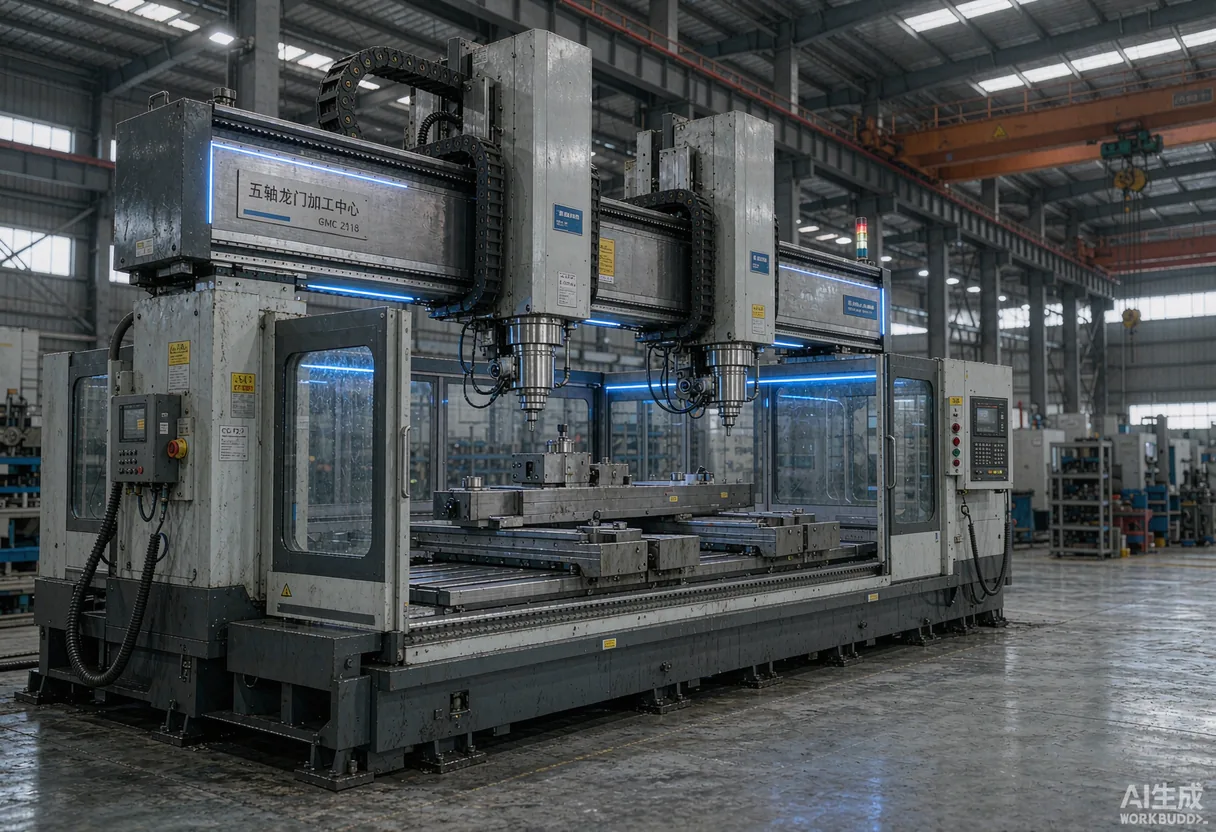
- The aerospace claim should be read precisely. State business media describe Gree's co-launched high-speed dual five-axis gantry as capable of precision-cutting aviation titanium in one setup. That is a machine-capability statement. Airworthiness is a separate system: AS9100D, NADCAP for special processes, AS9102 first-article inspection and material traceability.
- Where a Gree machine honestly fits today: moulds and dies, jigs and fixtures, ground-support equipment, non-flight structures, development and prototype work, composite tooling, and the emerging low-altitude / UAV segment.
- Where you should buy German, Japanese or Taiwanese instead: flight-critical nickel and titanium rotating parts, any programme with a prime-mandated machine list, ITAR-controlled work, and any plant where a two-hour service radius is worth more than the price gap.
Why "aerospace and mold" get bundled — and why they shouldn't be
Search data and trade-show floor plans both lump these two together, because both want the same three things from a machine: five simultaneous axes, a large working envelope, and the ability to hold tolerance on a curved surface. But they are governed by completely different rules, and conflating them is the single most expensive mistake a buyer can make in this segment.
Mould making is a capability business. If the cavity is in tolerance, the surface finish is right and the tool Fit is correct, the mould works. You can test that on the floor, in your plant, with your steel and your resin. Aerospace is a qualification business. The part may be perfect and still be undeliverable, because the paperwork chain — heat-treat furnace surveys, fluorescent penetrant inspection by a certified Level II technician, material chemistry traceable to an AMS specification — is what gives the part its airworthiness, not the cutting.
So this guide splits the answer in two. The first half is where Gree is genuinely strong. The second half is where we would tell you to buy something else.
The mold case: Gree's least-advertised credential
Gree Electric's machine tool business is young — Gree Intelligent Equipment was established in 2015 and describes close to a thousand staff with more than half in R&D, 4,323 patent applications and 1,939 granted. Its mould business is not young at all. Gree Precision Mold was founded in 1985 and is described by the company as one of the founding plants of Gree Electric — a large mould enterprise covering product development, sample 3D printing, mould design and manufacture, and the jigs and fixtures that go with them, serving automotive, household-appliance, office-equipment and motor moulds.
A second data point is less well known outside China: in March 2009 Gree Electric and Japan's Daikin Industries formed a precision mould joint venture in Zhuhai, held 51 / 49 in Gree's favour, on a 40,000 m² site. Working alongside a Japanese mould maker for more than a decade is not a certificate, but it is the kind of process discipline that shows up in tolerances and in how a shop documents its work.
Why should a machine buyer care? Because the design of a machine tool is shaped by whoever complains about it. A builder that has run its own mould shop for four decades has already paid for the lessons that a pure assembler learns on your floor: thermal growth over a long finishing cut, tool deflection in a deep rib, and the polishing hours that follow a poor surface. That is a design input, not a marketing line.
1985
Gree Precision Mold founded
51 / 49
Gree–Daikin mould JV split (2009)
1,939
Granted patents (Gree Intelligent Equipment)
RMB 380bn
China mould industry output, 2025
What moldmaking actually demands from a machine
The economics of a mould shop are not driven by spindle speed. They are driven by how many tryouts a mould needs before it ships. Every tryout is machine time, fitter time and delay. Three machine characteristics move that number, and they are worth checking on any brand, not just this one.
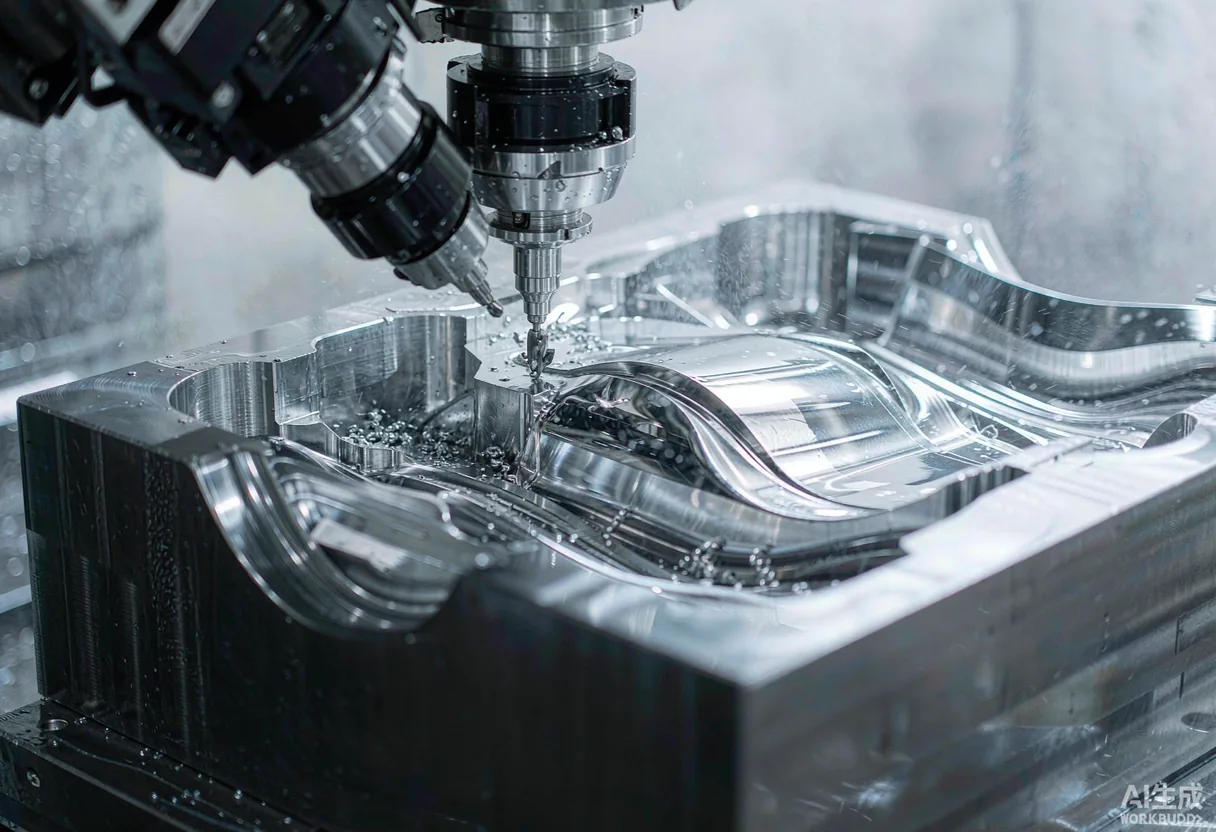
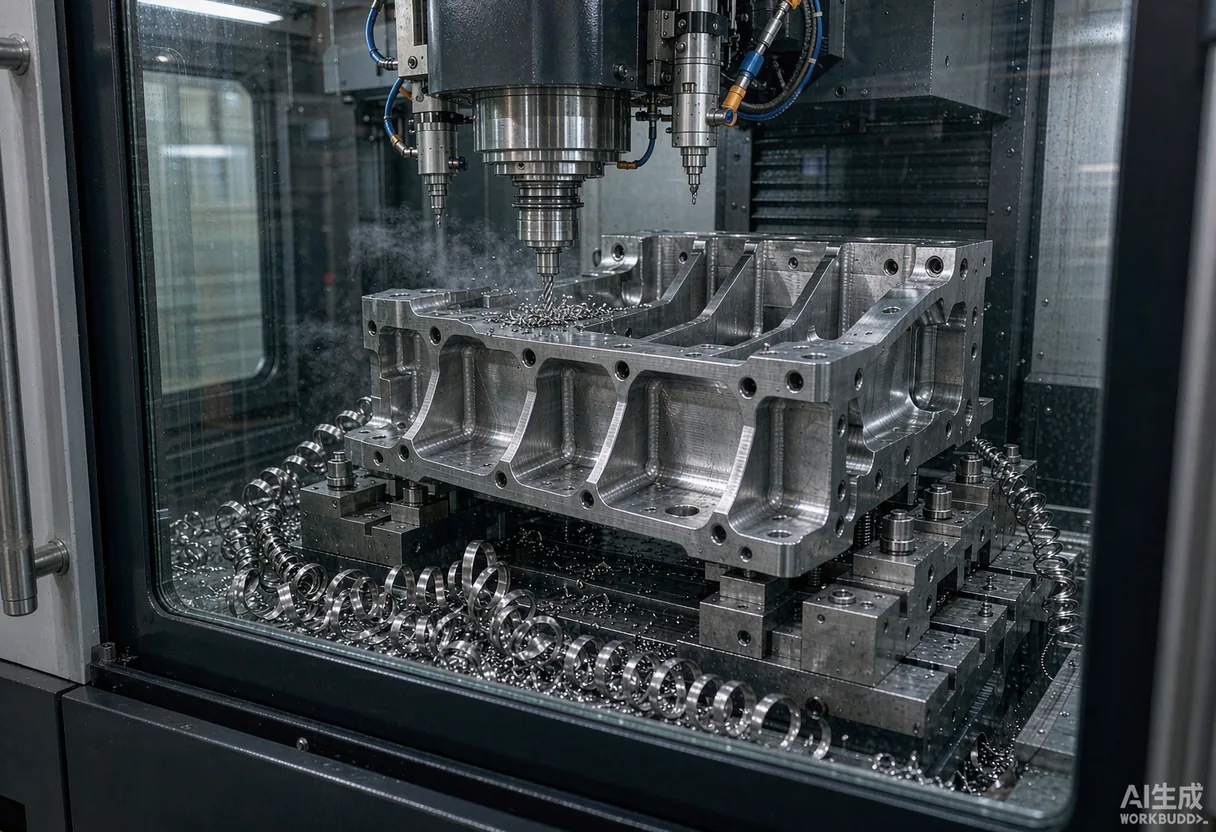
- Reach into a deep cavity with a short tool. A five-axis head can tilt the cutter so a short, rigid tool reaches a deep pocket instead of a long, chattering one. That is the difference between a surface you can polish in an afternoon and one you cannot.
- Thermal stability across a long finishing cycle. A large mould core can run for many hours. Spindle growth and ambient drift both land in the cavity. This is where Gree's appliance-world inheritance — it builds its own precision inverter chillers for its machines — is a real rather than cosmetic advantage.
- Envelope and table load. Large die-cast and bumper moulds are heavy. Gantry architecture with a one-piece cast bridge and base carries that load; that is why Gree's gantry family is specified for moulds, castings and large plate-type parts, with table load in the multi-tonne range.
| Mould / part class | What the machine must do | Fit for Gree's line |
|---|---|---|
| Large die-cast & bumper moulds | Big envelope, high table load, deep-cavity reach | Good gantry architecture |
| Precision injection mould inserts, electrodes | High rpm, fine finish, small features | Good five-axis vertical / drill-tap |
| Home-appliance and motor laminate moulds | Consistency, long unattended runs | Good — Gree's home territory |
| Optical / mirror-finish moulds | Sub-micron surface, thermal control, metrology loop | Partial validate on a trial part |
| Flight-critical aero-engine parts | Qualified process chain, not just metal removal | Not recommended |
The aerospace claim, read carefully
Here is what is actually on the record. In June 2025, Chinese state business media reporting on Gree's co-launched high-speed dual five-axis gantry machining centre — released jointly with a Chinese die-casting specialist and already a 2025 Geneva International Exhibition of Inventions gold medallist — described the machine as supporting six-face machining in a single setup and capable of precision-cutting aviation titanium alloy, with a stated error of 0.001 mm. A senior engineer from the China Machinery Industry Federation was quoted framing the launch as a demand-side and supply-side collaboration that accelerates the localisation of five-axis machine tools in precision manufacturing.
Every element of that can be true, and it still does not mean a shop can ship a flight part because it owns this machine. The sentence to hold onto is this: cutting the alloy and being approved to deliver the part are two separate questions, answered by two separate systems. The first is answered by the machine tool. The second is answered by the quality system of the shop — and the machine builder does not own it.
Controller note, stated plainly. Gree's self-development is strongest on the motion-execution chain — electro-spindle, linear motor, direct-drive rotary table, servo drives and thermal control. The high-end CNC control layer is partner-led, drawing on mature products from established control makers. That is normal for machine builders worldwide and is not a defect, but it does mean the control's service route should be named separately in your contract.
The qualification wall: what actually gates aerospace work
If you are evaluating any machine for aerospace — Chinese, German or Japanese — these are the gates, and none of them are satisfied by a machine specification sheet.
| Gate | Who owns it | What to ask for |
|---|---|---|
| AS9100D quality management | The shop making the part (not the machine builder) | Certificate number, then verify in the IAQG OASIS database — and read the scope page, not the logo |
| NADCAP special processes | Shop or its sub-tier processor | Accreditation for the specific commodity — heat treat, NDT, chemical processing, welding — checked in the Performance Review Institute directory |
| AS9102 first-article inspection | Shop, per part number | Ballooned drawing, calibrated CMM dimensional report, functional test results |
| Material traceability | Shop's receiving and certification records | Mill certificate with chemistry and mechanical properties to the applicable AMS or ASTM specification |
| Export and technical-data control | Shop and programme | ITAR / dual-use exposure, and whether service technicians can lawfully access the control remotely |
Two of these deserve emphasis because they catch buyers out. First, a certificate whose scope does not cover your material class and part family is not evidence of anything for your programme. Second, a self-declaration is not an accreditation — both AS9100D and NADCAP status are verifiable in public registries, and any supplier that treats them as negotiable after award is signalling a gap in the quality system.
Where a Gree machine honestly fits in an aerospace supply chain
This is the part most vendor pages skip. A machine that cannot be used for flight-critical rotating parts is still useful to an aerospace supply chain, and pretending otherwise would be worse than useless.
- Tooling Moulds, dies and composite layup tools — the tooling that makes aerospace parts, not the parts themselves.
- Fixtures Jigs, assembly fixtures and check fixtures — where tolerance matters, airworthiness does not, and lead time is money.
- GSE Ground support equipment and test rigs — large aluminium structures, no flight release.
- Development Prototype and development machining — where a fast, affordable five-axis lets engineering iterate before a qualified production route is fixed.
- UAV Low-altitude economy and uncrewed air vehicles — the fastest-growing five-axis demand segment in China by published growth rate, and one where qualification regimes are still settling.
- Sub-tier Non-critical structures as a sub-tier supplier — viable only if the prime accepts the quality system and the flow-down is documented in the purchase order.
Where to buy German, Japanese or Taiwanese instead
We are a Gree CNC distributor, so this section is against our short-term interest — which is exactly why it is here. Buy elsewhere if any of the following is true of your programme.
- You are machining flight-critical rotating parts in nickel superalloy or titanium, where the process database and the qualification history are worth more than the iron.
- Your prime contractor mandates a machine list or a process database built around one incumbent control dialect.
- The work is ITAR-controlled or otherwise restricted on technical data access and service personnel nationality.
- Your downtime cost is extreme and you cannot hold critical spares — then a two-hour service radius beats any price gap, and the incumbent networks are denser outside China. We would rather lose the order than win it and lose you at 2 a.m.
- You need locally auditable safety traceability with a regulator or customer who expects European or Japanese provenance.
Data credibility rating
| Claim | Source | Rating |
|---|---|---|
| Gree Precision Mold founded 1985; one of Gree Electric's founding plants | Gree Precision Mold company site | High first-party |
| Gree–Daikin mould JV, March 2009, 51/49, 40,000 m² | Joint-venture company site | Medium first-party; some figures dated |
| Gree Intelligent Equipment est. 2015; 4,323 applications / 1,939 granted patents; ~1,000 staff, >50% R&D | Gree Electric group site | High first-party |
| Dual five-axis gantry: six-face one-setup, aviation titanium, 0.001 mm; 2025 Geneva gold | State business media (Economic Daily network), June 2025 | High as a report of the claim; Medium as vendor-stated performance |
| China mould industry 2025 output RMB 380bn; exports >USD 10.2bn (+17%); imports USD 947m | DMC2026 exhibition coverage via Chinese state-affiliated press | High |
| AS9100D / NADCAP / AS9102 requirement structure | Aerospace sourcing guides; registries named for verification | Medium — verify any specific certificate yourself |
| Chinese five-axis demand split by sector | Multiple research houses | Low estimates differ by roughly 3×; direction only, not budget input |
A seven-question check before you buy for either application
- Is this a capability question or a qualification question? If airworthiness is involved, the machine is the easy part — start with the quality system, not the spindle.
- What is the deepest cavity and the longest tool reach on my worst part? That single dimension decides gantry versus vertical more reliably than any catalogue.
- How long is my longest finishing cycle? If it exceeds a few hours, ask for thermal-growth data measured after a defined warm-up, not a 20-minute demo.
- What is the actual table load and envelope I need in five years? Mould shops grow into bigger work; buying to today's largest mould is a common regret.
- Which control, and who services it in my country? Name the control and the service route separately in the contract.
- Can I run a paid trial part? Your steel, your programme, measured on your CMM, including a re-measurement after 24 hours of drift.
- What happens at 2 a.m.? Response clock, escalation owner, critical spares list with part numbers, and the second route if an engineer cannot fly in.
Honest limits of this guide
- We are a Gree CNC distributor, not a neutral referee. Treat every favourable statement with that in mind and verify on a trial part.
- Published machine figures in this article are vendor-stated or media-reported; we have not independently re-measured them.
- Aerospace qualification rules change by programme, prime and country. The gates listed here are the common structure, not legal advice for your contract.
- Chinese five-axis market sizing is genuinely disputed between research houses; we deliberately did not pick a number for the sector split.
Bottom line. For mould and die work — including large die-cast moulds and precision appliance moulds — Gree is a serious, well-grounded option with four decades of in-house practice behind the machines. For certified flight hardware, the honest answer today is no, and the reason is a quality system nobody can sell you with a machine. Tooling, fixtures, ground equipment, prototypes and UAV work sit comfortably in between.
Frequently asked questions
Can a Gree machining center cut aerospace titanium?
Gree's co-launched high-speed dual five-axis gantry machining center is described in Chinese state business media as capable of precision-cutting aviation titanium alloy with six-face machining in a single setup and an error of 0.001 mm. That is a machine-capability statement, not an airworthiness qualification. Cutting the material and being approved to deliver flight parts are two separate questions answered by two separate systems.
Is Gree AS9100D certified?
A machine tool builder is not normally the certificate holder you need. AS9100D and NADCAP accreditations belong to the shop making the part, not to the company that built the machine. Ask any supplier for the certificate number and check it in the IAQG OASIS database, and check NADCAP accreditation in the Performance Review Institute supplier directory.
Which Gree machine suits large die-cast and injection molds?
Large, heavy molds with deep cavities suit a gantry-style machining center, because the bridge structure carries the load and lets short tools reach into deep pockets. Gree's gantry family is built around one-piece cast bridge and base construction with high table load capacity. For smaller precision mold inserts and electrodes, a five-axis vertical or a high-speed drill-tap centre is usually the better economic answer.
Why is Gree's mold background relevant if I am not buying a mold?
Because a builder that has run a mold shop for decades has already suffered the problems you will hit: thermal growth over a long finish cut, tool deflection in a deep rib, and polishing time after a poor surface. Gree Precision Mold was founded in 1985 as one of the founding plants of Gree Electric, so some of the machine design decisions reflect shop-floor experience rather than catalogue specification.
Related reading
Not sure whether your parts belong on a Gree machine?
Send your part drawing, material, tolerance and target volume — we will tell you honestly whether a Gree five-axis or gantry fits, and when it does not, we will say so.