The model-level lineup this component stack sits inside — GA-FA320, GA-UHD500, GA-FMB3020D, GA-VT540.
Gree CNC · Engineering Guide
Gree CNC Core Components: Spindle, Linear Motor & Direct Drive — A Buyer's Verification Guide
Executive summary — read this first.
- Components are roughly 40% of machine cost. On a million-RMB-class machining center, the linear motor, servo drive, CNC system and electro-spindle are the four items that dominate both price and long-run behaviour. Choosing a machine without asking who made them is choosing blind.
- Gree's genuine self-development is the motion-execution chain — high-speed electro-spindle, linear motor, direct-drive rotary/tilting table, servo drive and machine thermal control — transferred from decades of compressor and motor engineering in its air-conditioner business.
- The high-end controller is not in-house. China's Economic Daily reported in May 2024 that for control systems Gree uses mature products from domestic and overseas suppliers including Huazhong CNC (HNC) and Siemens. Any claim of a fully self-developed high-end CNC controller should be treated as unverified.
- What is still bought in: ultra-precision bearings and ultra-high-accuracy grating scales. In the hardest work, high-end rotary tables and linear scales still come from European specialists. Gree's own engineer has publicly said production consistency on high-precision parts is still being solved.
- What you can do about it: a six-step acceptance protocol — origin list, spindle thermal data, closed-loop confirmation, table torque and re-calibration, firmware ownership, and a paid trial part with a 24-hour drift measurement.
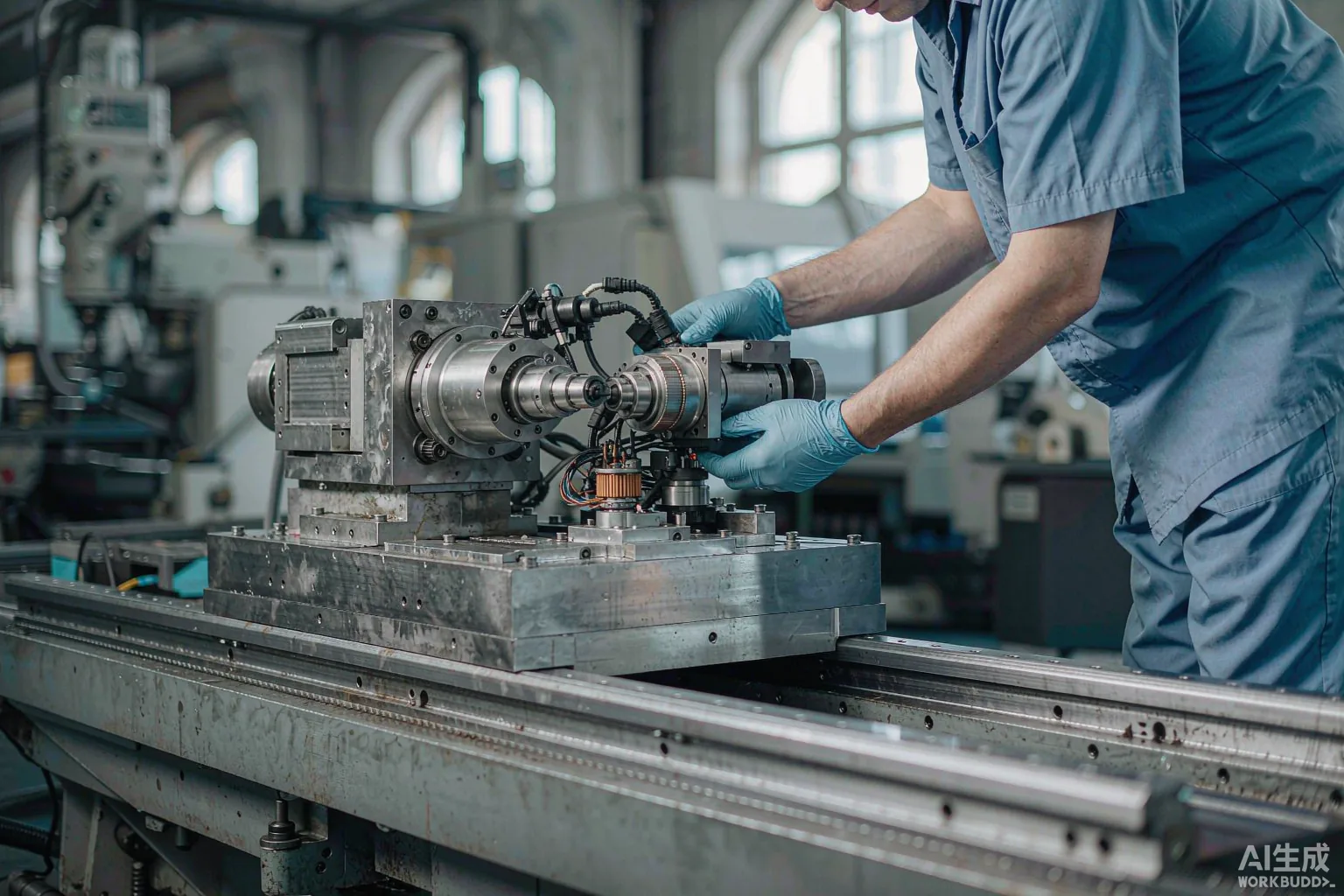
Why core components decide what a machine actually costs you
A machine tool is not one object. It is an assembly of subsystems that somebody else chose, and those subsystems determine uptime, accuracy retention, spare-part exposure and resale value. The catalogue number describes the machine on the day of acceptance. The components describe what it costs you for the next ten years.
Chinese reporting puts a number on it: on a high-end machining center in the million-RMB class, the linear motor, servo drive, CNC system and electro-spindle together account for roughly 40% of total cost. That figure matters to a buyer for a second reason — it is also roughly the share of value that can be held hostage by a supplier you never met, never negotiated with, and cannot escalate to when a part fails on a Friday night.
This is why component origin has become a practical question rather than an engineering curiosity. When a component's maker is also the machine's maker, the failure path is short: one contract, one escalation route, one inventory. When it is a third party, you inherit whatever commercial terms the builder negotiated — and you usually do not get to see them.
What Gree CNC actually builds in house
Gree Intelligent Equipment (established 2015, Zhuhai and Wuhan parks) is unusual among Chinese machine builders because it arrived from the appliance side with an existing competence in motors, compressors and thermal control. Its self-development is concentrated in the motion-execution chain — the parts that turn a command into metal removal.
Electro-spindle (motorised spindle)
An electro-spindle integrates the motor, the bearings and the sensors into one rotating cutting-head assembly, eliminating belts and gearboxes. Gree's equipment-power research institute has stated, in an interview carried by Economic Daily, that its self-built spindles run at 24,000–40,000 rpm with performance "comparable to international brands", and that the assembly contains around 80 distinct parts which must reach one micron of assembly precision before shipment. The same source notes Gree began selling spindles to outside customers in October 2023, and — importantly — that the team was still working on consistency between machining and assembly in volume production. That single sentence is the most useful thing a buyer can read: the hardest part of spindle-making is not making one good spindle.
Linear motor
A linear motor drives an axis directly instead of pushing it through a ball screw. There is no screw to wear, no backlash to compensate, and acceleration and rapid-traverse speeds rise sharply. Gree's stated position is that it insists on self-built linear motors for speed and accuracy, with throughput described as more than double an equivalent ball-screw machine — a builder's claim quoted in the same Economic Daily report, not an independent test. Gree also cites a self-developed low-cogging-torque and low torque-ripple design.
Direct-drive rotary / tilting table
A direct-drive table replaces the worm-and-gear mechanism with a torque motor coupled straight to the axis. There is no mechanical wear path, so the theoretical accuracy is stable over time rather than drifting as a worm gear beds in. On the GA-FA320 five-axis, Gree publishes a fully direct-drive cradle configuration with zero-backlash operation and 0.006 mm repeatability.
Servo drive and thermal control
Servo drives and the machine's thermal control (keeping the structure at a stable temperature so it does not grow during a shift) are the quiet half of accuracy. Gree's appliance heritage is most visible here: it has published work on transferring air-conditioning thermal management into spindle and structure temperature control. The engineering logic is sound — a machine that drifts 10 µm between a cold Monday start and a warm Thursday afternoon will fail a tolerance it passed at acceptance.
Where each component appears in the Gree lineup
Component choices are not uniform across a product line. This is the part of the catalogue most buyers never see, because it is buried in machine-specific spec sheets rather than in the brochure.
| Model | Machine type | Drive / component highlight | Published figure |
|---|---|---|---|
| GA-FMB3020D | High-speed dual five-axis gantry | Self-developed precision direct-drive AC swing head, high-thrust linear motor, high-torque rotary table; twin beams and twin electro-spindles | Rapid traverse up to 120 m/min; one-setup six-face machining; 2025 Geneva Invention Exhibition gold |
| GA-FA320 | Five-axis vertical, direct-drive cradle | Full direct drive on rotary axes, zero backlash | Repeatability ~0.006 mm |
| GA-UHD500 | High-speed five-axis | Fast tool change, tight repeatability | Positioning 0.004 mm / repeatability 0.002 mm; 1.5 s tool change; 60 m/min rapid |
| GA-GF series (3755 / 6028 / 8030) | High-speed gantry and vertical centres | High-damping mineral-cast or marble structures; X-axis linear motor on the 3755 | Electro-spindle up to 20,000 rpm; 100 m/min on X; repeatability 0.010 mm on the large gantry models |
| GA-VT / GA-MV / GA-TV series | 3C, general vertical and tapping centres | Direct-coupled high-speed spindles; cast-iron three-point beds | Spindle up to 15,000–20,000 rpm depending on model |
Read the table as a starting point, not a specification. Model-year revisions change component content. Ask for the component list that applies to your quotation and machine serial range.
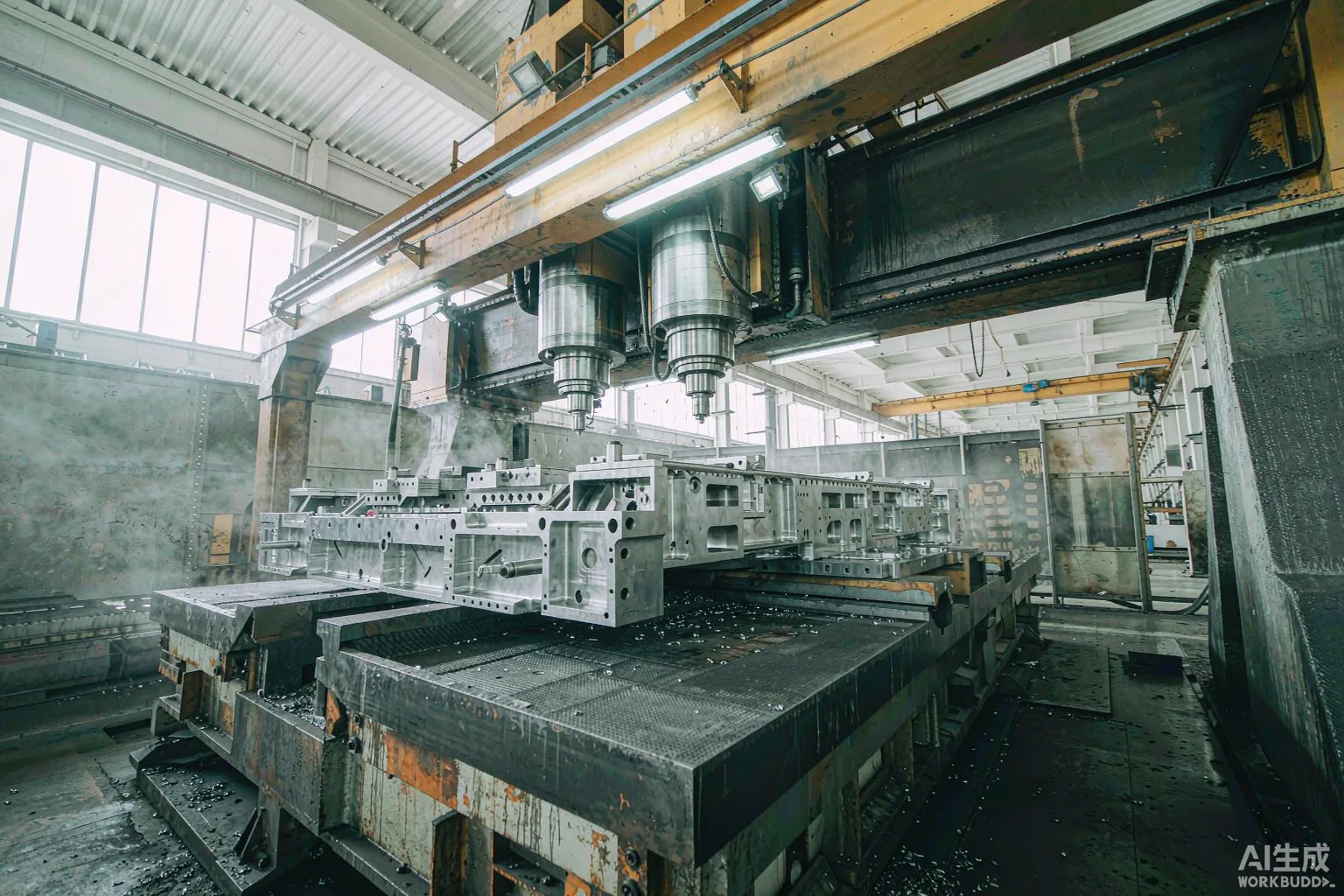
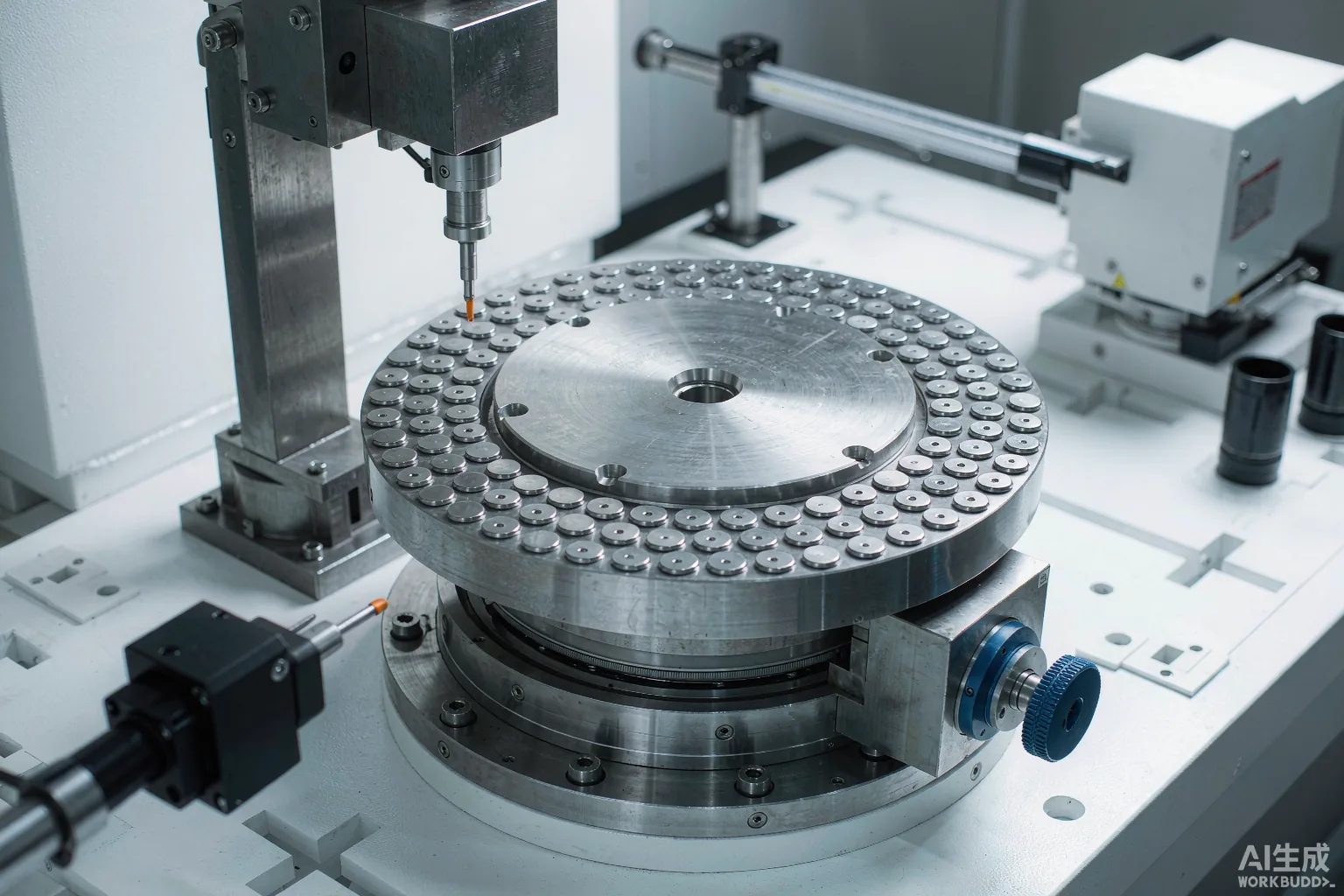
The controller question, stated plainly
Online commentary frequently claims that Gree's five-axis machines are entirely self-developed, CNC controller included. We do not repeat that claim, because the most authoritative source we have says something more specific.
Economic Daily's 2024 feature on Gree's machine-tool programme states that, on the control-system side, Gree uses mature products from domestic and overseas manufacturers such as Huazhong CNC (HNC) and Siemens, while cooperating with Harbin Institute of Technology on motor technology. That is not a weakness in the way internet arguments frame it — it is a rational sourcing decision. A mature controller has a trained global service base, a stable post-processor ecosystem and predictable update rights. A proprietary one offers control but asks the buyer to accept a single-vendor dependency.
Our standing position. Gree's credible self-development claim is the motion chain — spindle, linear motor, direct-drive table, servo and thermal control. The high-end controller remains an acknowledged gap. If a seller tells you otherwise, ask them to put the controller make and model in writing on the quotation.
What is still bought in — and why you should ask anyway
Honest disclosure is cheaper than a surprised customer. Three limitations are worth stating before anyone signs:
- Ultra-precision bearings and ultra-high-accuracy grating scales. These remain largely imported. Chinese financial press reported in mid-2025 that they still represent a large share of machine cost and that Gree has been investing in a dedicated core-component industrial park with a stated localisation target — treat the specific percentage and the target year as reported figures, not audited ones.
- High-end rotary tables and linear scales in the hardest work. Chinese industry reporting in September 2026 quotes machine-industry executives saying that in the most demanding scenarios these still come from European specialists. This is an industry-wide position, not a Gree-specific one.
- Volume consistency. Again, from Gree's own engineer: making one micron-accurate spindle is a solved problem; making ten thousand of them to the same standard is the work in progress. If your business is a handful of very tight parts, this matters less. If it is high-mix production where every spindle must behave identically, ask directly.
None of these is disqualifying. All of them are answerable with a document.
A six-step protocol to verify component claims at acceptance
This is the part you can use on any supplier, including us. It costs one email and one day of testing.
| # | Ask for | Why it matters |
|---|---|---|
| 1 | A written component origin list, with approved substitutes named for each critical part | Turns a marketing claim into a contractual one, and tells you where single-source risk sits |
| 2 | Spindle run-out and thermal-growth data after a defined warm-up (30 / 60 / 120 minutes) at rated speed | Rated rpm is a catalogue line; warm-up behaviour is what decides scrap on the first parts of a shift |
| 3 | Confirmation of full closed-loop vs semi-closed-loop per axis, plus scale maker and replacement lead time | A linear motor without a scale is not measuring where the table actually is; scale origin also decides repair time |
| 4 | Direct-drive table clamping torque curve, accuracy after N hours, and the local re-calibration plan | "Zero wear" is a design property; re-calibration is an operational cost you will eventually pay |
| 5 | Drive firmware ownership and update rights; cost and terms of a licence transfer | Determines whether you, the builder, or a third party can service and modify the machine in year five |
| 6 | A paid trial part with a 24-hour drift re-measurement on your material | The only test that combines every subsystem at once, under your tooling and your CAM |
Data credibility rating
| Claim | Source | Rating |
|---|---|---|
| Four core components ≈ 40% of a million-RMB-class machine's cost; self-built linear motors; spindles 24,000–40,000 rpm; ~80 parts, 1 µm assembly precision; spindles sold externally since Oct 2023; consistency still being solved | Economic Daily / China Economic Net feature, May 2024, quoting Gree's equipment-power research institute | High |
| Control systems use mature products from Huazhong CNC (HNC), Siemens and others; motor cooperation with Harbin Institute of Technology | Same Economic Daily feature | High |
| GA-FMB3020D: self-developed direct-drive AC swing head, high-thrust linear motor, high-torque rotary table; twin beams/spindles; 120 m/min rapid; one-setup six-face machining; Geneva gold 2025; 4,429 cumulative patent applications in intelligent equipment | gie.gree.com official news, Gree Intelligent Equipment (first party) | High |
| GA-FA320 ~0.006 mm repeatability; GA-UHD500 0.004 / 0.002 mm, 1.5 s tool change, 60 m/min | Gree published product documentation; also carried in our 5-axis guide | High |
| Gantry one-piece cast structure, XYZ high-speed direct drive, 1.1 G acceleration, 120 m/min | China Industry News (CIMT 2025 coverage) | Medium-High |
| High-end rotary tables and linear scales still sourced from European specialists in the hardest applications | Party-press industry feature, Sept 2026, quoting named machine-industry executives | Medium-High |
| Ultra-precision bearings and ultra-high-accuracy scales still import-dependent; core-component industrial park investment and localisation target | Chinese financial press aggregator, July 2025 | Medium — directional; verify before contractual use |
| GA-GF3755 X-axis linear motor, 100 m/min, 20,000 rpm spindle; GA-TV750 15,000 rpm | Encyclopaedic aggregator entries (not first party) | Low — confirm on the official spec sheet |
When this component stack fits — and when to buy elsewhere
Where Gree's approach pays off. Large aluminium and new-energy-vehicle integrated die-cast work, robot-joint and 3C parts, and any shop that values a short escalation path because one company owns the spindle, the motor and the table. If your risk is "nobody will take responsibility when it stops", a vertically integrated builder is structurally easier to deal with than an assembler.
Where you should buy German, Japanese or Taiwanese instead. Say this out loud and you will save everyone time:
- Your process is certified — aerospace or medical qualification histories that depend on a documented, audited component chain.
- Your parts are aero-engine titanium or nickel superalloy rotating components. This is not where the Chinese process database is deepest, including Gree's.
- Your tolerance depends on a process package — cutting strategies, tool libraries, post-processor maturity — rather than on machine geometry alone.
- A two-hour service radius is worth more to you than the price difference. Our own first overseas service point is in Malaysia; in Europe and North America we work through regional partners. Know that before you buy, not after.
Bottom line. "In-house components" is not a slogan to accept or reject — it is a list of parts to verify. Ask for the list, test the machine on your part, and let the measurements decide.
Frequently asked questions
Which core components does Gree CNC build in house?
Gree develops its own motion-execution chain: high-speed electro-spindles, linear motors, direct-drive rotary and tilting tables, servo drives and machine thermal control. Its own engineer, quoted by Economic Daily in 2024, puts spindle speed at 24,000–40,000 rpm and describes a roughly 80-part spindle assembly that must reach one micron before it leaves the factory.
Does Gree make its own CNC controller?
Not at the high end. Economic Daily reported in May 2024 that for control systems Gree uses mature products from domestic and overseas suppliers such as Huazhong CNC (HNC) and Siemens. Gree's genuine self-development sits in the motion chain — spindle, linear motor, direct-drive table, servo and thermal control. Treat any claim that Gree builds its own high-end controller as unverified.
Why does an in-house linear motor matter to a buyer?
A linear motor drives the axis directly instead of through a ball screw, removing a wear part and raising acceleration and rapid-traverse speed. It also removes a supplier you did not choose. The trade-off is serviceability: ask whether the axis is fully closed-loop with a grating scale, who makes the scale, and what a replacement costs and how long it takes.
Which Gree CNC parts are still imported?
Ultra-precision bearings and ultra-high-accuracy grating scales remain largely imported, and in the hardest applications high-end rotary tables and linear scales still come from European specialists such as Siemens and Heidenhain. Chinese industry press reported in 2025 that these items still account for a large share of machine cost and that Gree has been investing in a dedicated core-component industrial park to lift localisation.
How can I verify a component claim before I buy?
Ask for a written component origin list with approved substitutes; request spindle run-out and thermal-growth data after a defined warm-up, not just rated speed; confirm whether each axis is fully closed-loop and who supplies the scale; ask for the direct-drive table torque curve and re-calibration plan; establish who owns the drive firmware and update rights; and run a paid trial part with a 24-hour drift measurement before committing volume.
Related reading
Want the component list for the machine you are quoting?
Send the model, your part material, tolerance and target volume — we will return the written component origin list, the acceptance-test protocol for that machine, and a quotation within one business day.