Gree's in-house motion hardware — and its honest note on the still-partly-imported measurement layer.
China CNC · Component Deep-Dive · Issue #24
China's High-End Bearings & Grating Scales — The Import Gap
Executive summary — read this first.
- A CNC machine tool is only as accurate as its measurement and precision-transmission layer. Two components sit at the heart of that layer: grating scales (光栅尺, the position sensor — the machine's "eyes") and high-end bearings (the "joints" that carry the spindle and rotary table).
- These are precisely where China's import dependence is still highest. Cross-checked industry data puts high-end absolute grating-scale localization at roughly 15% (so ~85% imported) and high-end CNC-bearing import reliance in the 35–60% band — versus near-100% domestic for structure/casting and a fast-closing gap on spindles and linear motors.
- For an overseas buyer this is a verification item, not a disqualifier. A Chinese five-axis running imported German or Japanese scales and bearings can still be a sound, cost-effective purchase — and avoids the remote-lock risk some Western brands have been associated with.
- Domestic challengers are emerging: Yuheng Optics (禹衡光学) has reached ±1 micron/metre absolute-scale accuracy and already supplies KEDE, Haitian and Neway, backed by the 15th Five-Year Plan and a dedicated industrial-mother-machine fund.
- Gree's own CNC line (e.g. the GA-UHD500) is built on self-developed motion hardware with partner-supplied controllers — its accuracy story rests on the same supply reality, so validate any published spec on a paid trial part.
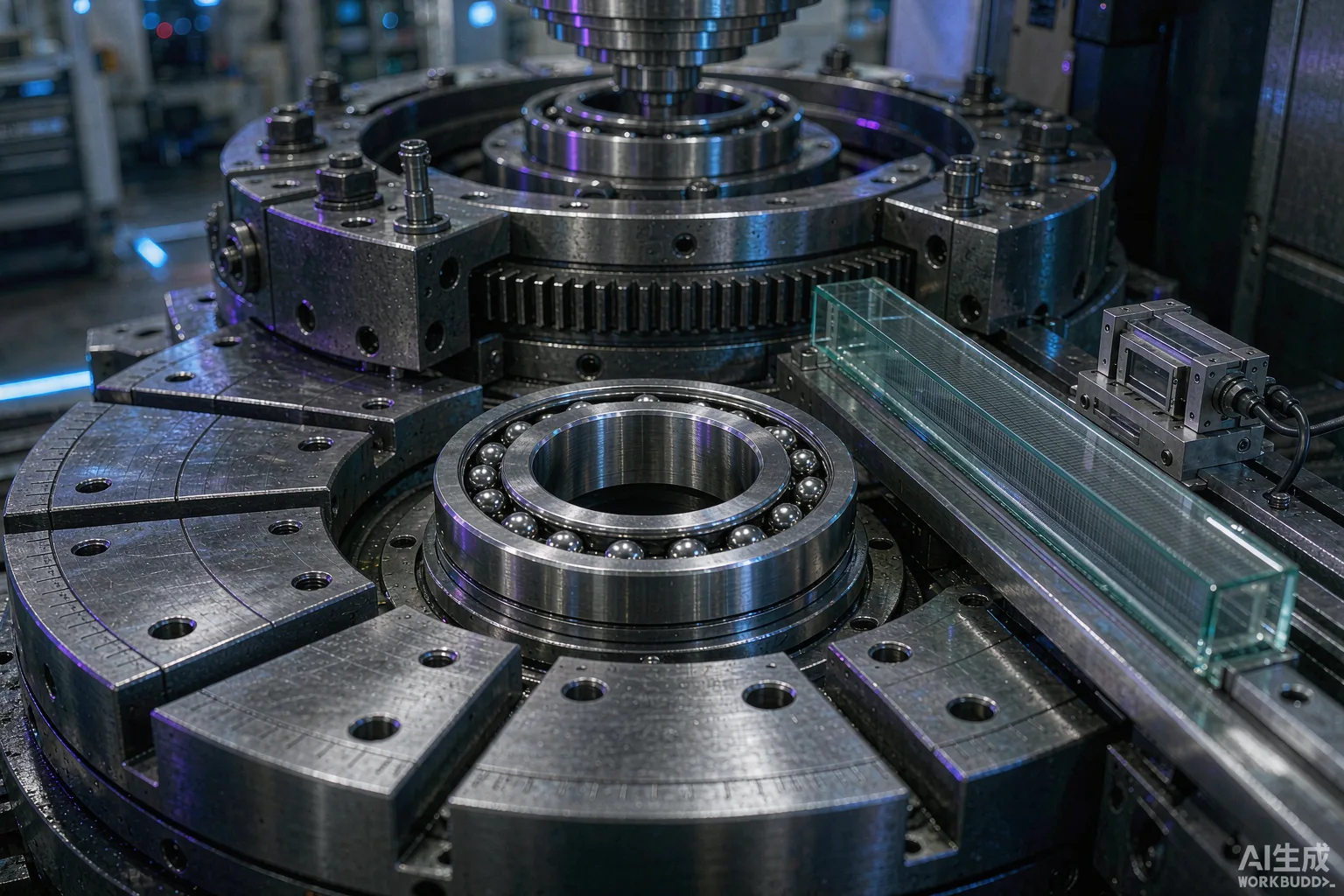
Snapshot: where the import gap lives
The table below maps China's self-sufficiency across CNC component layers, using the most consistent 2023–2025 industry figures. Ranges reflect differing definitions (e.g. "high-end absolute scale" vs "all high-precision scales"), which is itself part of the story.
| Component layer | 2025 localization / import reliance | Buyer read |
|---|---|---|
| Structure & casting (bed, frame) | ~100% domestic | Solved |
| Motion hardware (spindle, linear motor, rotary table) | Largely domestic; Gree/Haozhi/Jingdiao competitive | China strong |
| High-speed electro-spindle | ~35% localized (≈65% import) | Improving fast |
| Precision ball screw | ~20% localized (≈80% import) | Exposed |
| High-end bearings (machine-tool grade) | Import reliance 35–60% | Exposed |
| High-end absolute grating scale | ~15% localized (≈85% import) | Most exposed |
| CNC system (high-end) | <15–25% localized | Most strategic |
Sources: China Report Hall (中国报告大厅) bearing-industry data; industry research compilations (docin, 2023); machine-tool component BOM analyses (2025–2026 financial media). See the credibility table for per-figure ratings.
What China does well
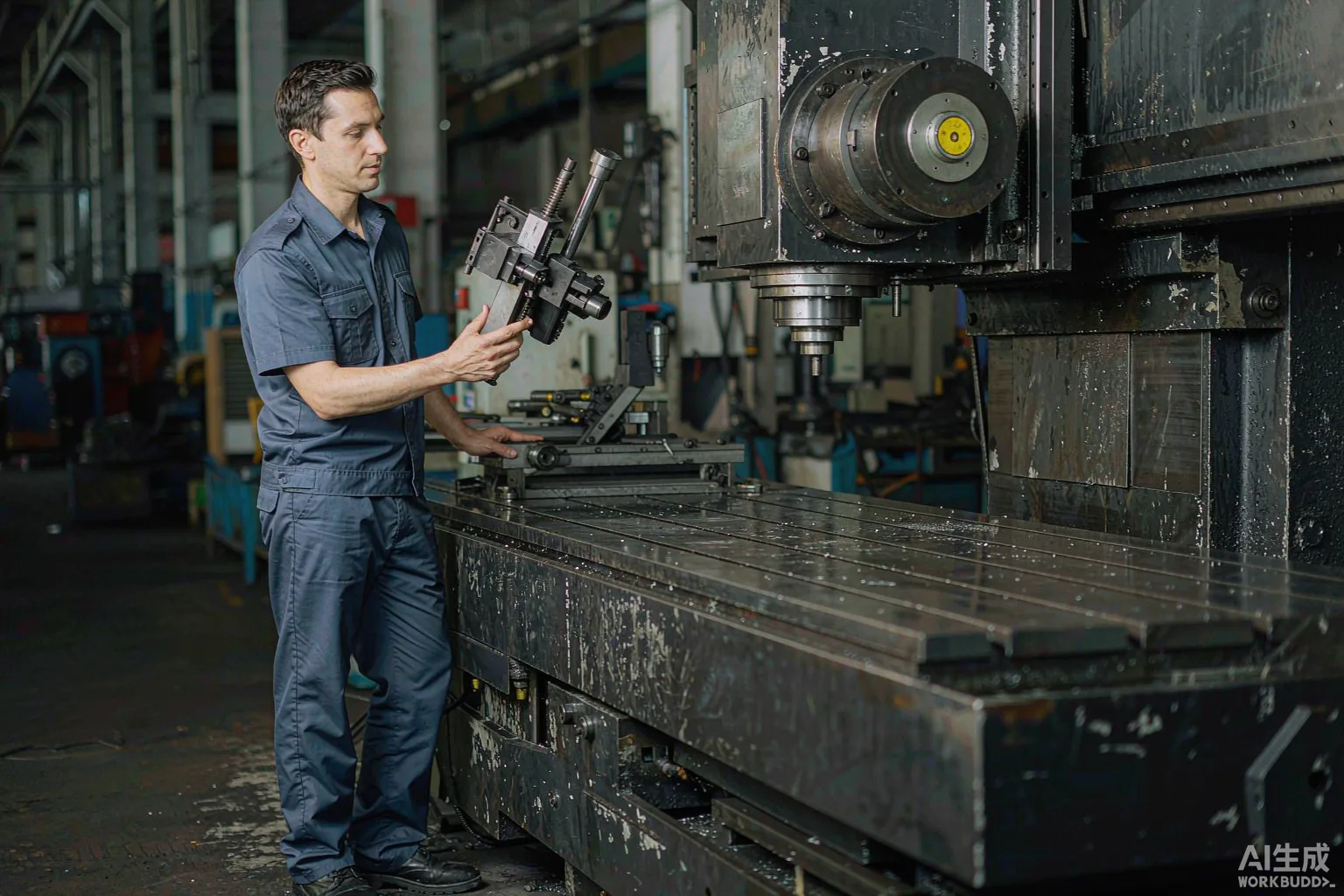
China's CNC industry has genuinely closed much of the motion gap — the hardware that actually moves the tool and workpiece:
- Motion Gree, Haozhi (昊志机电) and Beijing Jingdiao build competitive in-house spindles, linear motors and direct-drive rotary tables. Gree's GA-UHD500, for example, pairs a self-developed third-generation linear motor with a high-rigidity bed.
- Cost & lead time Domestic machines typically deliver in 2–4 months versus 6–12 months for imported equivalents — a structural advantage for capacity expansion.
- Measurement layer Yuheng Optics has reached ±1 micron/metre absolute-scale accuracy and supplies leading Chinese OEMs, proving the measurement gap is closing, not permanent.
- Policy The 15th Five-Year Plan elevates industrial mother machines to national-strategy level, alongside a dedicated industrial-mother-machine investment fund (reports cite a ¥50B+ scale) and a 2026 tax-deferral notice easing equipment trade-ins.
Where the gap still lives (engineering-maturity view)
This is a maturity gap, not a defect — and it matters mainly at the tightest tolerances. Vendor and industry figures repeatedly cite two concrete gaps:
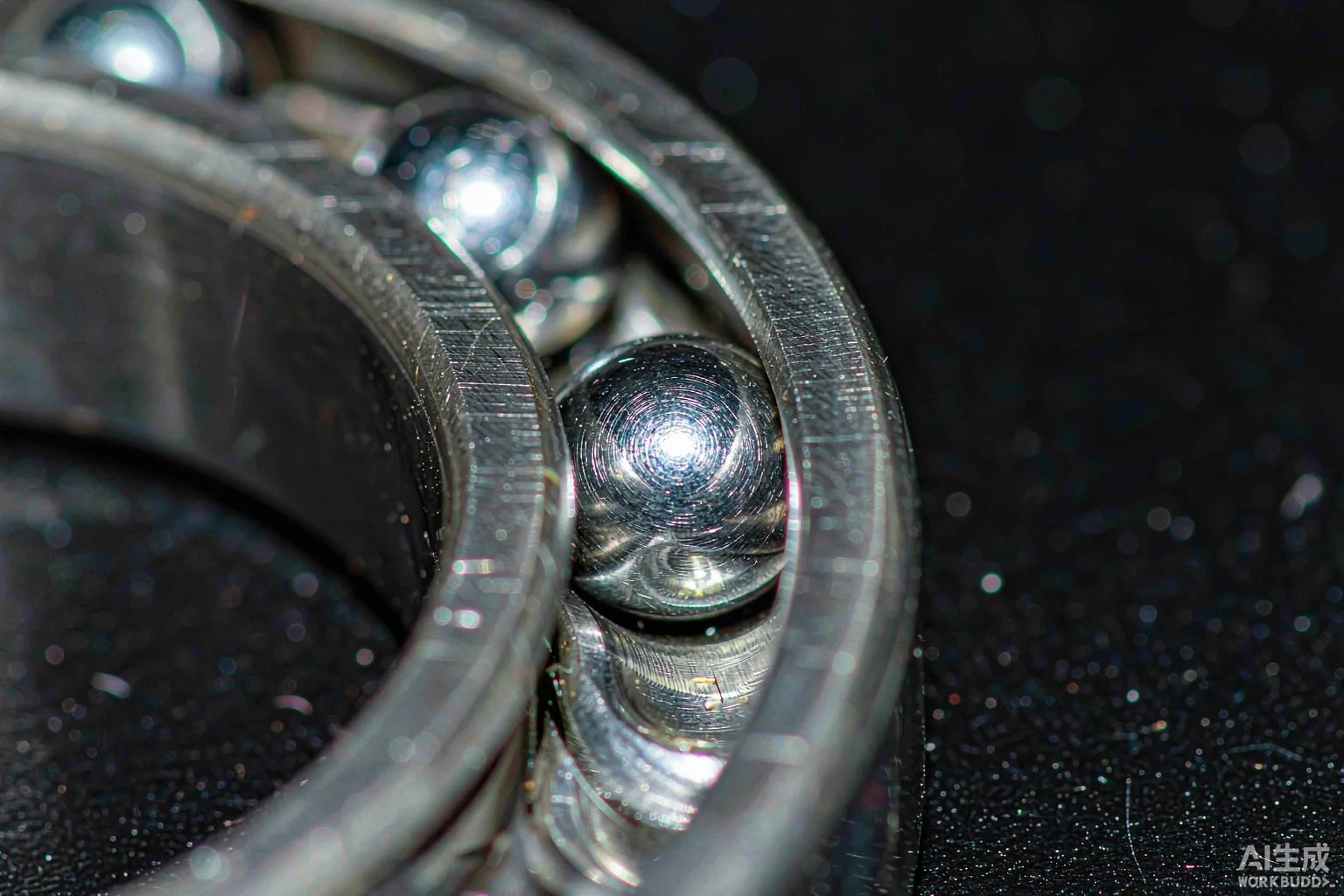
- Spindle-bearing life: domestic grades are quoted around 12,000 hours versus 20,000 hours for imported leaders (Schaeffler / NSK / SKF) under continuous heavy duty.
- Rotary-table positioning: roughly 5 arc-seconds (domestic) versus 2 arc-seconds (imported) — a difference that only bites on the most demanding aerospace or optical work.
- Scale precision ceiling: top domestic absolute scales sit near ±1 micron/metre; the very top imported tier is tighter still, and sub-micron-grade share of the Chinese market remains in the single digits.
Buyer takeaway. For the bulk of production machining (±0.005–0.01 mm class — EV parts, 3C, general engineering), these gaps are negligible. They become decision-relevant only for sub-micron, aerospace or optical-grade work, where asking which scale and bearing brand a machine uses is the right move.
Competitive positioning
| Layer | Foreign leaders | Chinese status | Implication for buyers |
|---|---|---|---|
| Grating scales | Heidenhain (DE), Renishaw (UK) | Yuheng + others emerging; ~15% high-end localization | Verify the scale brand on high-precision jobs |
| Spindle bearings | Schaeffler, NSK, SKF | Domestic mid-grade improving; life gap on 24/7 duty | Factor bearing life into TCO on continuous runs |
| Ball screws | THK, NSK | Import-heavy (~80%) | Domestic-sourced lead-time advantage if specified |
| Motion (spindle / linear / rotary) | FANUC, Siemens, DMG MORI | Gree / Haozhi / Jingdiao competitive | China is strong here |
Overseas reality — a sourcing note, not a verdict
For a distributor or end-user outside China, the import gap should be read through three practical lenses:
- Composition over origin. A Chinese five-axis with imported Heidenhain scales and Schaeffler bearings is, on those subsystems, a German/Japanese-spec machine at Chinese lead time and total cost. The weak-point components are also the most serviceable — they can be specified, stocked and replaced.
- Supply security. Gree's self-made motion hardware plus partner controllers means no black-box remote lock-in — a point overseas buyers have increasingly weighed after high-profile cases of Western machines being remotely disabled.
- Validate, don't assume. Published specs describe capability; a paid trial part in your own material proves it. That single step neutralises most of the risk the import gap implies.
Gree angle (this week). Gree's CNC business reported 2025 intelligent-equipment segment revenue of ¥681M (+60.51%) — its fastest-growing segment — with cumulative CNC R&D above ¥6B. Its Zhuhai Jinwan plant was named to MIIT's first batch of national "pilot-grade" (领航级) smart factories. The GA-UHD500 dual-station horizontal center publishes positioning 0.004 mm / repeatability 0.002 mm, 60 m/min rapid and 1.5 s tool change — first-party specs. Gree candidly frames its path as self-developed core components + partner controllers, an honest acknowledgment that the high-end CNC "brain" remains a shared industry bottleneck.
Data credibility rating
| Claim | Source | Rating |
|---|---|---|
| High-end absolute grating-scale localization ~15% (≈85% import) | Machine-tool component BOM analysis, 2026 financial media | Medium single-source figure; broader high-precision scale market cited at 34% |
| High-end CNC-bearing import reliance 35–60% | China Report Hall 2025 industry data; 2023 component report (58%) | Medium range reflects differing definitions |
| Precision ball-screw import dependence ~80% | 2023 high-end CNC component report | Medium 2023 baseline, improving since |
| Spindle-bearing life 12,000h (domestic) vs 20,000h (imported) | Industry / vendor bearing analysis | Medium vendor-stated comparison |
| Yuheng Optics grating-scale revenue ¥1.27B (+89%), ±1µm/m, supplies KEDE/Haitian/Neway | 2026 financial-media company profile | Medium media-sourced, plausible, not audited here |
| Gree GA-UHD500: 0.004/0.002 mm, 60 m/min, 1.5 s tool change | Gree first-party (gie.gree.com) + national media | High first-party specs |
| Gree 2025 intelligent-equipment ¥681M (+60.51%); R&D >¥6B | Gree annual report / investor platform | High official disclosure |
| Zhuhai Jinwan = MIIT national "pilot-grade" smart factory | National media, 2026 | Medium-High government list, media-relayed |
| Five-axis localization ~59.5% (2025) | CMTBA data via industry media | Medium whole-machine, not component |
Guidance by use case
- General / EV / 3C machining (±0.005–0.01 mm): a Chinese machine is typically a strong fit — verify the spec sheet and run one trial part.
- Tight-tolerance / aerospace / optical (sub-micron, ±0.002 mm, arc-second class): ask which scale and bearing brand is fitted; consider an imported-measurement configuration, or wait for domestic maturity.
- High-mix / 24-7 production: build bearing service life and spare-parts lead time into total cost of ownership; stock the weak-point components.
Five-point buyer checklist. (1) Which grating-scale and bearing brands are fitted? (2) What accuracy is validated on a paid trial part? (3) What is bearing life and spare lead time for continuous duty? (4) Is the controller self-developed or partner-supplied — and what does that mean for lock-in? (5) Has the published spec been proven on your material? Validate before you volume-commit.
Frequently asked questions
What is a grating scale and why does it matter for CNC accuracy?
A grating scale (光栅尺) is the machine tool's position sensor — often called its "eyes". A glass or steel strip is etched with microscopic lines; as the table or tool moves, an optical reader counts those lines to know the exact position, feeding that data back to the controller many times per second. The finer and more stable that measurement, the tighter the tolerance the machine can hold. High-end absolute scales from German or British makers can read to roughly ±1 micron per metre; Chinese-made absolute scales have reached a similar ±1 micron/metre class on mid-grade work but still trail at the very top end.
Are Chinese high-end machine tools still dependent on imported bearings and scales?
Yes, on the measurement and precision-transmission layer. Published industry data puts high-end absolute grating-scale localization at roughly 15% (so ~85% imported) and high-end CNC bearing import dependence in the 35–60% range. By contrast, structure, casting and much of the motion hardware (spindles, linear motors, rotary tables) are now largely domestic. The practical read: a Chinese five-axis is often a strong, cost-effective buy, but on the tightest-tolerance jobs it may still run on German or Japanese scales and bearings — which is a sourcing note for the buyer to verify, not a quality verdict.
Which Chinese companies are closing the grating-scale and bearing gap?
On grating scales, Yuheng Optics (禹衡光学, an Advanced Optoelectronics subsidiary) is the standout: 2025 grating-scale revenue of about ¥1.27B (+89%), ~48% gross margin, absolute-scale accuracy around ±1 micron/metre, already supplying makers such as KEDE, Haitian and Neway. On bearings, specialist precision-bearing houses are pushing into spindle-bearing grades, though imported Schaeffler / NSK / SKF parts still lead on very high-duty-cycle life. The substitution push is backed by the 15th Five-Year Plan and a dedicated industrial-mother-machine investment fund.
How should an overseas buyer evaluate a Chinese CNC on its measurement and motion parts?
Ask four questions: (1) Which brand of grating scale and spindle bearings does the machine use? (2) What accuracy is validated on a paid trial part, not just claimed on a spec sheet? (3) For 24/7 duty, what is the bearing service life and spare-parts lead time? (4) Is the controller self-developed or partner-supplied — and does that affect future lock-in or remote-access risk? Validate the published spec on a real part in your own material before committing volume.
Related reading
Not sure which components your parts demand?
Send your part drawing, material, tolerance and target volume. Our application engineers will specify the right scale, bearing and spindle grade — and return a quotation within one business day.